What It Takes to Build Racial Equity and Lasting Power – Together.
🌟 Two days. Four plenaries. One message: movements win when they organize, fund, and govern together. 🤝
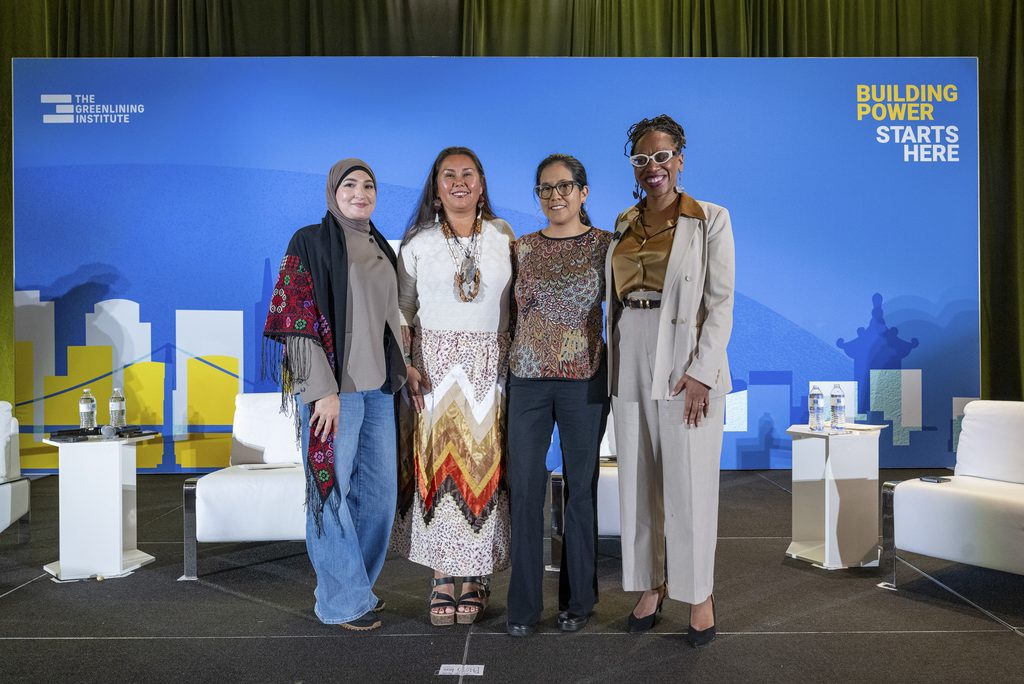
Rep. Lateefah Simon alongside national racial equity leaders Linda Sarsour, Morning Star Gali, and Camila Chávez
We learned that building a just future that uplifts communities and offers hope to future generations requires more than us simply resisting harms from the opposition. It means building the power, relationships, and systems that allow communities and local leaders to shape their own futures.
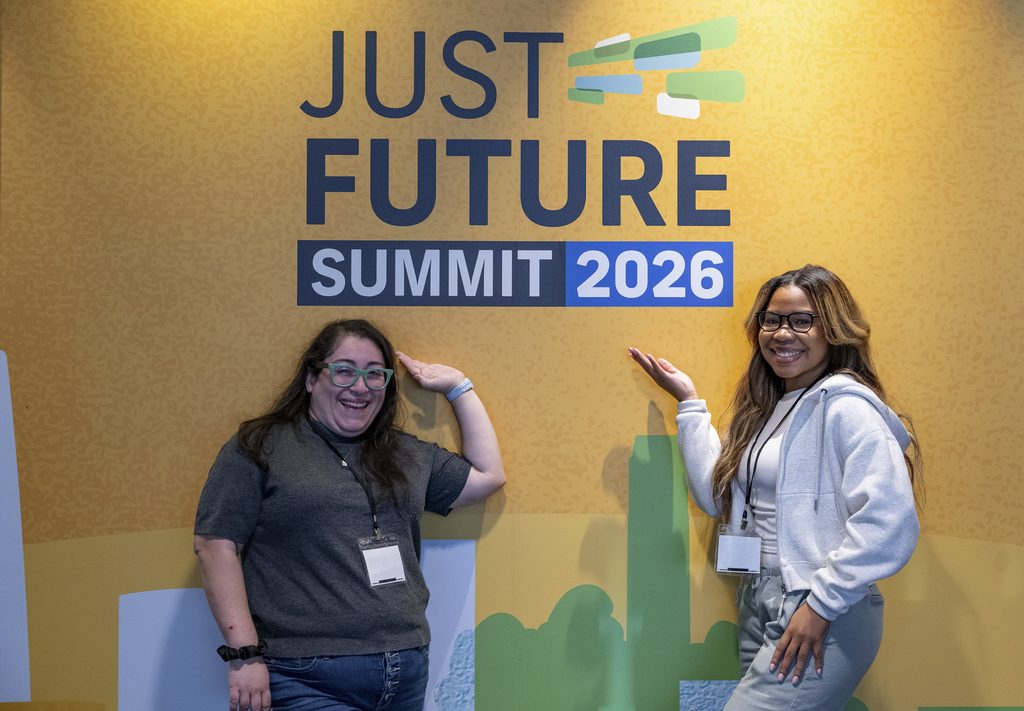
Thank you to everyone who supported and joined us for The Greenlining Institute’s Just Future Summit 2026 at the Hyatt Regency San Francisco on October 8-9, 2026. Over the course of two days, we witnessed relationships turn into alliances and alliances transform into leverage. This year’s speakers offered wisdom and showed us how we could move forward together towards a just future.
Here’s a recap of Just Future Summit 2026:
Day One: The Power of Organizing, Storytelling, and Community
How Do Movement Leaders Reimagine Democracy?
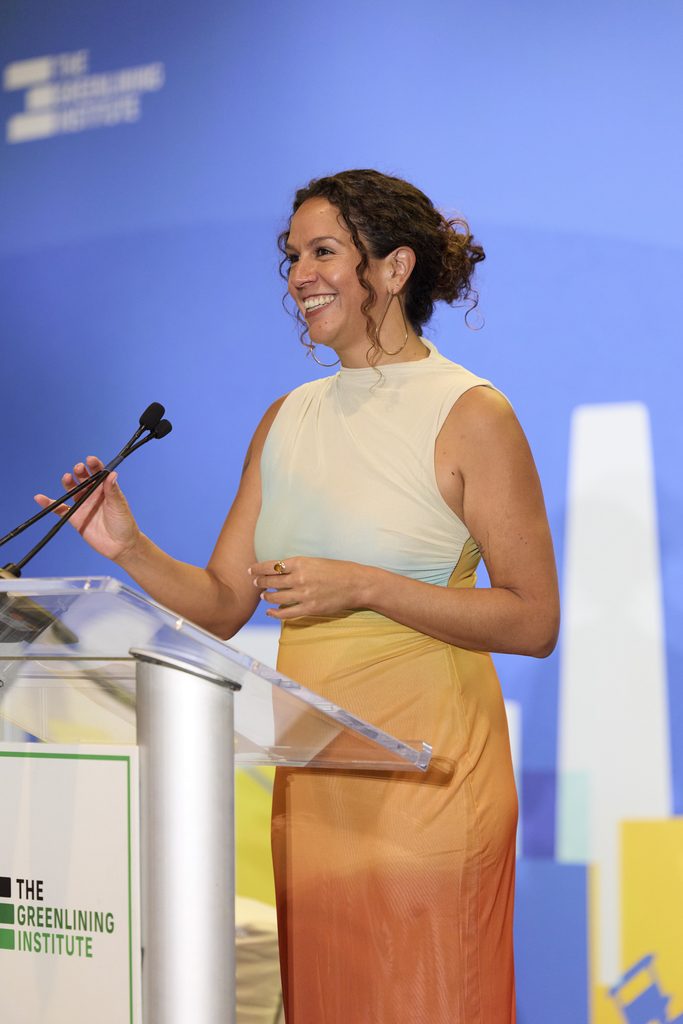
After welcome remarks from Fred Blackwell of the San Francisco Foundation, Congresswoman Lateefah Simon moderated a compelling opening plenary with national movement leaders Linda Sarsour, Morning Star Gali, and Camila Chávez.
With an urgent call to action, Linda Sarsour challenged attendees to stay focused on building a just future rather than getting consumed by fear or dismay. She encouraged everyone to ask themselves a simple question each day: “What am I doing today to alleviate harm?”
Sarsour also called on organizations to set competition aside and urged funders and philanthropic leaders to “put the money on the table” to help advance transformative change. But it was her closing question — “What kind of ancestor do you wanna be?” Which drove home the stakes of the work and challenged attendees to think beyond finding immediate bandaid solutions to today’s crises and to start strategizing toward lasting solutions.
Dolores Huerta Foundation’s Executive Director Camila Chávez, who has organized farmworkers for more than two decades, reinforced the important role that grassroots organizing plays in the movement building ecosystem. Recalling a non-cooperation training where undocumented participants said U.S. citizens seemed more afraid than they were, she underscored the need to meet people where they are: in their homes, neighborhoods, and communities. “As people of color, we have never experienced true democracy,” she said.
Together, their remarks underscored a central lesson:
Building power means giving communities greater influence over the decisions, resources, and outcomes that shape their lives — not simply inviting them into conversations after the most important choices have already been made.
Camila Chávez, Dolores Huerta Foundation’s Executive Director
Power-building requires funders, policymakers, and institutions to do more than listen. It means sharing resources, establishing strategic partnerships, and making room for community leadership to shape the work from beginning to end.
Morning Star Gali brought that principle to life by highlighting California’s first guaranteed income and microgrant pilot for Indigenous survivors of violence. The initiative responded to a documented crisis: research cited by the National Institute of Justice found that 84.3% of Native women have experienced violence in their lifetimes.
However, Gali also criticized California’s leadership for not being bold enough in their pursuit of a just future and for failing to protect Native religious practices and access to waterways. Her message to funders and allies was clear: “Our survival is evidence that another future is possible.” Gali also called on institutions to compensate Indigenous leaders for the knowledge and expertise they contribute, including through education and land acknowledgments.
Who Tells Our Stories?
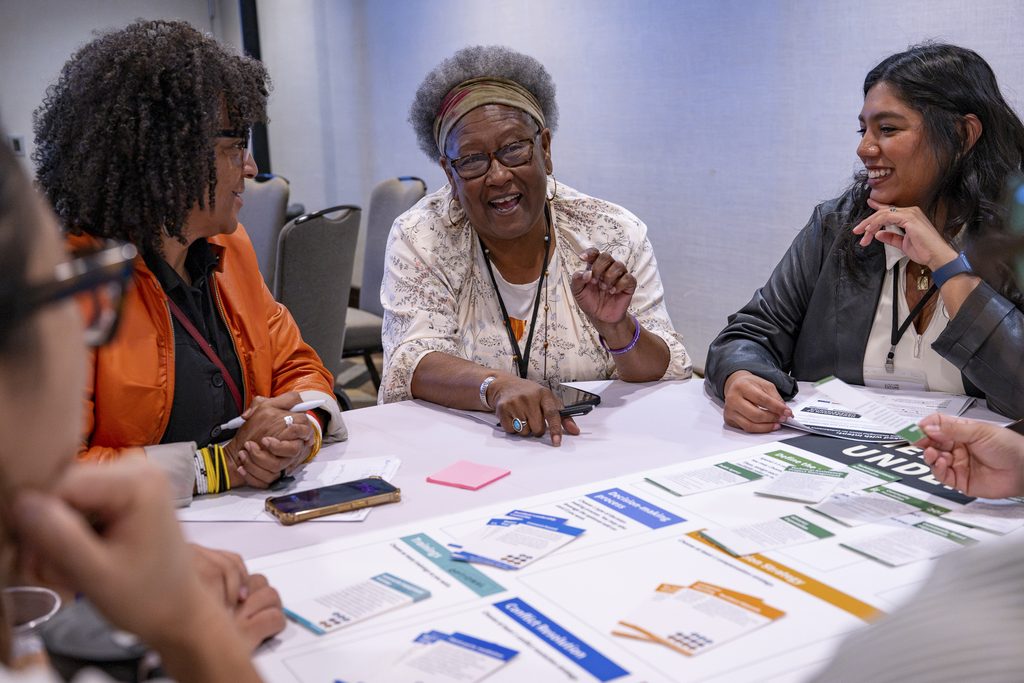
After an afternoon of breakout sessions, the final plenary turned to the power of storytelling. The stories we tell about our communities shape what people believe is possible, whose experiences they value, and which solutions they are willing to support.
Bestselling author Jeff Chang sat down with award-winning novelist Tommy Orange for the afternoon plenary. Orange argued that artists deserve the same attention, time, and funding as any other part of the movement. “Artists can speak to the part of you that needs to change,” he said.
Orange rejected the pressure to show up unbroken. Moving “from despair to repair,” he said, means gathering everyone’s shards into a mosaic. He described the “quiet violence” of family silence, using the story of his late father to show how protection and trauma can run together. He also drew a pointed parallel: early ledger art sold “authentic” images to survive, much as nonprofits perform for funders today. Chang added that censors target stories precisely because stories hold power.
If we want a different future, we have to make it possible for people to imagine one.
Day Two: What Will It Take to Build a Different Future?
Day 2 opened with a tribute to the late George Dean, The Greenlining Institute’s co-founder and a longtime coalition co-chair whom speakers remembered for integrity and joy. His legacy set the tone for the day’s larger question: How do we sustain progress and keep building toward a just future, even as the political landscape shifts?
Asking the Big Question – How Do We Advance Equity Beyond the Backlash?
The rapidly changing political landscape is a real threat to decades of progress. While defending hard-won protections remains essential; resistance cannot be the entirety of our vision for the future. We must proactively build the partnerships, institutions, and community power that can outlast the whims of our political system.
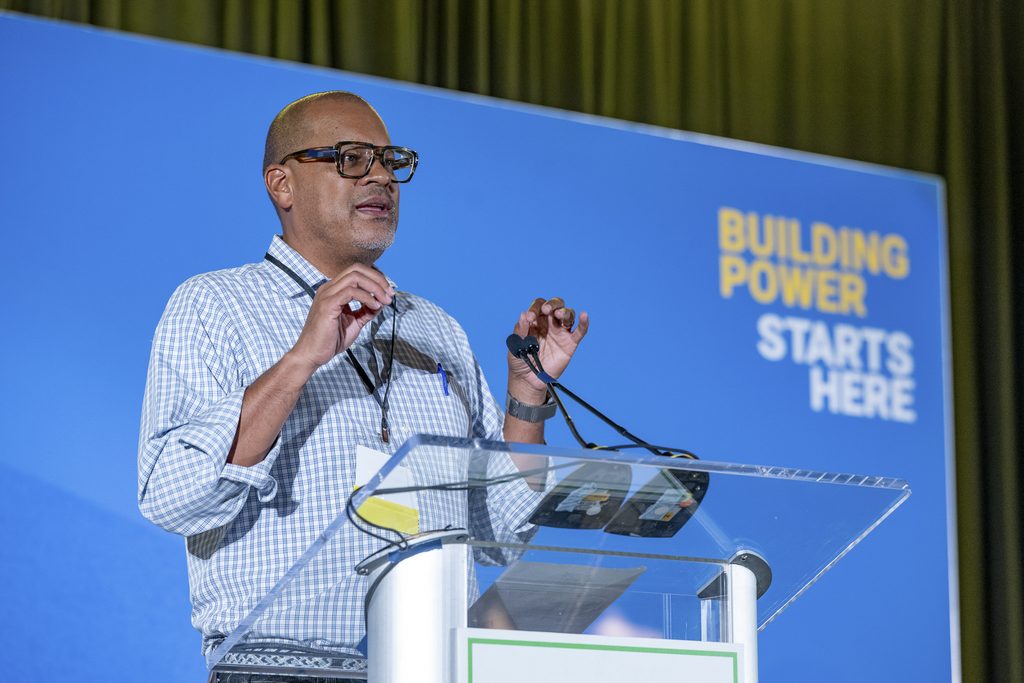
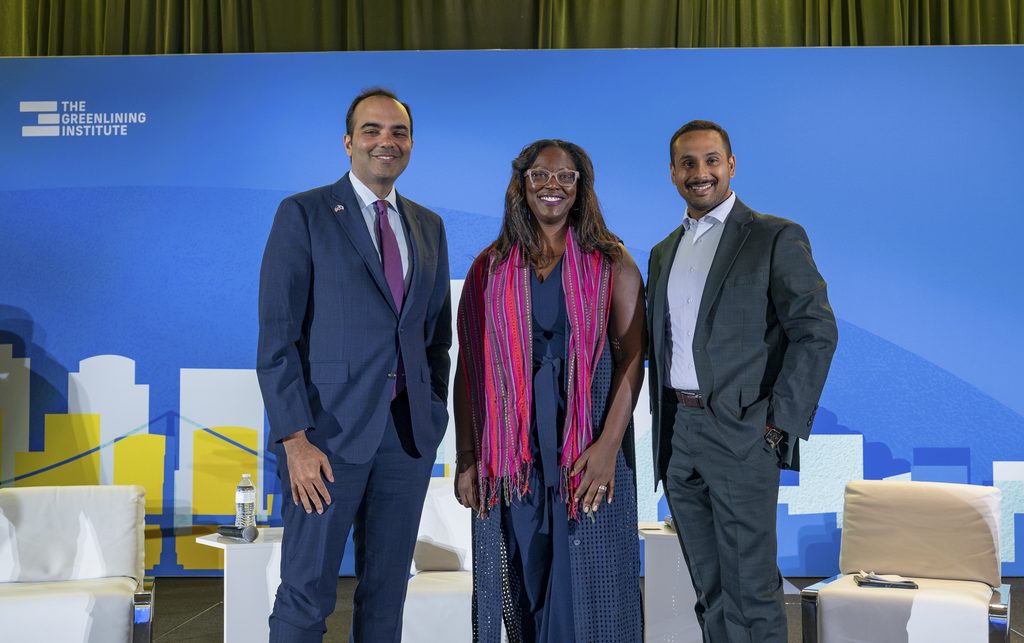
Greenlining’s Vice President of Policy Kirin Kumar moderated the plenary with Dr. Jalonne White-Newsome and Secretary Rohit Chopra. Kumar set the stakes by recalling a childhood home beside a trucking depot, where his mother developed asthma. He challenged the room to “build a greenlined economy where communities of color can lead, build, and thrive.”
Chopra, now Secretary of California’s Business and Consumer Services Agency, said leaders spend “too much time to mourn and not enough time to act.” He called for reconstruction, not restoration. Chopra argued that hard-won laws such as the Community Reinvestment Act deserve a new version, not a nostalgic one. He warned that AI-driven lending and insurance can create new redlining, and he noted that regulators already enforce fair-lending law against modern-day redlining. He also highlighted state-level public models such as CalRx, which lowers the cost of drugs such as insulin.
White-Newsome, who served as senior director for environmental justice at the White House Council on Environmental Quality, recalled telling her staff their job was “to make the impossible possible.” She said that work moved $1.92 billion to underinvested communities. Her most durable lesson: “One thing that a transition can’t take away is the relationships we created.” She closed with a call for local philanthropy, government, and nonprofits to build resilience that survives federal swings.
How Do We Grow the Next Generation of Racial Equity Leaders?
For the last panel, we were reminded that no single organization, sector, or leader can build a just future alone. Progress requires people who can move between communities, government, philanthropy, business, and advocacy — and who remain accountable to the communities this work is meant to serve.
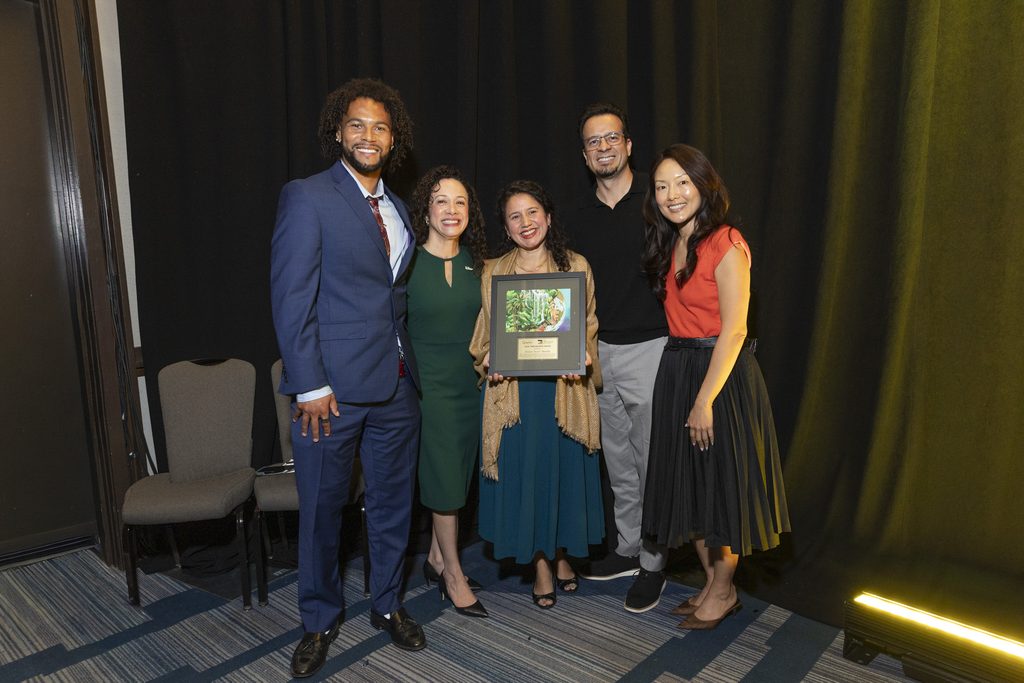
Leadership Academy Alumni and Torchbearer Awardee Jessie Buendia moderated the final plenary with Jane Kim, Noemí Otilia Osuna Gallardo, Gyasi Pigott, and Héctor Preciado, all Greenlining Leadership Academy alumni.
Jane Kim shared three lessons:
- Demand more from capital
- Claim your seat because “our ancestors died for us to be here.”
- Learn to be “scared and fearless at the same time.”
Osuna Gallardo, the first Latina commissioner at the California Energy Commission, called the Academy “a factory of social justice leaders.” She explained that rules keep changing once communities start winning, so movements need leaders in every sector who can referee. Pigott, a recent graduate from the class of 2025, warned that institutions often co-opt equity language, and he urged leaders to keep the conversation alive in every room. Preciado, the Academy’s first alum to enter tech, described Greenlining as “audacious and family.”
Kim also reframed insurance as mutual aid. She said farmers started it as a collective way to share risk, and communities can reclaim that spirit.
Together, their experiences showed why leadership development matters beyond preparing individuals for the next opportunity. It builds a network of people equipped to challenge inequity wherever decisions are being made.
Thank you for joining us!
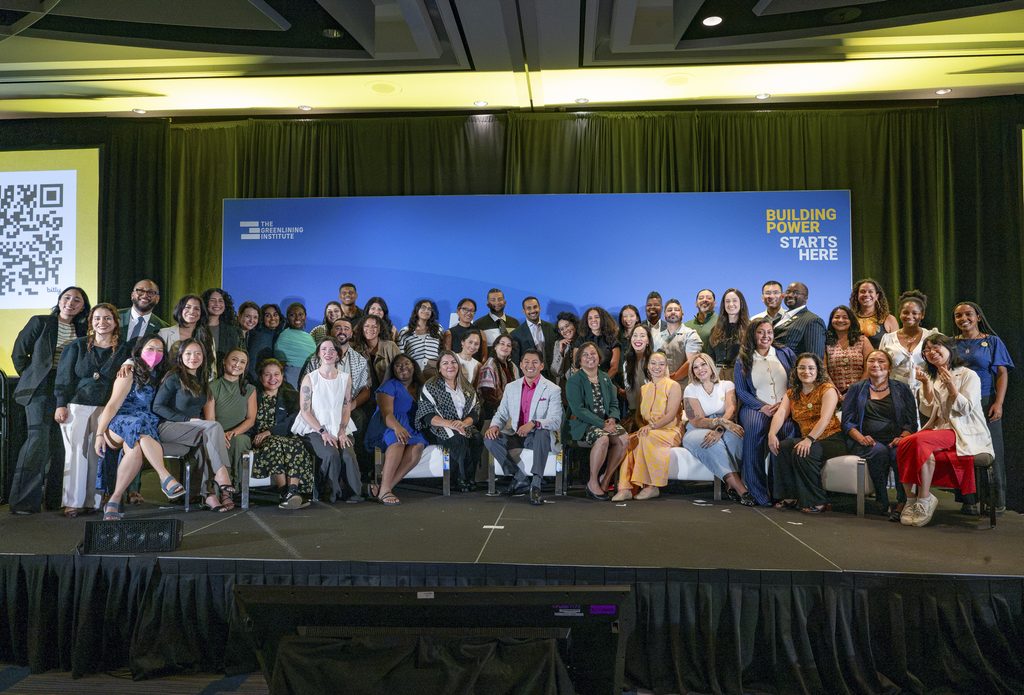
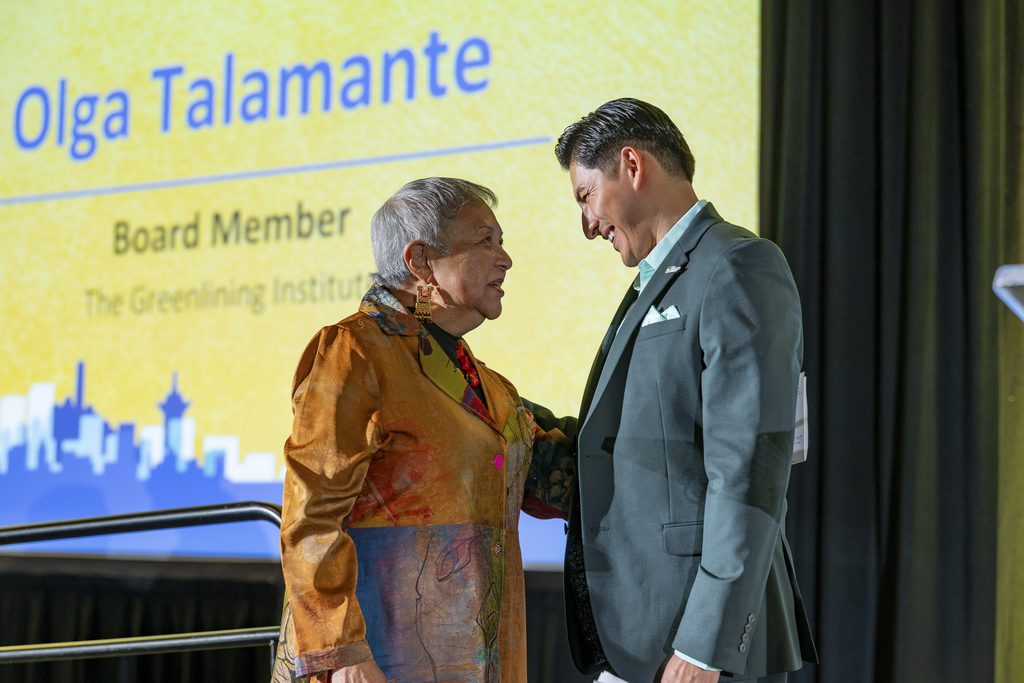
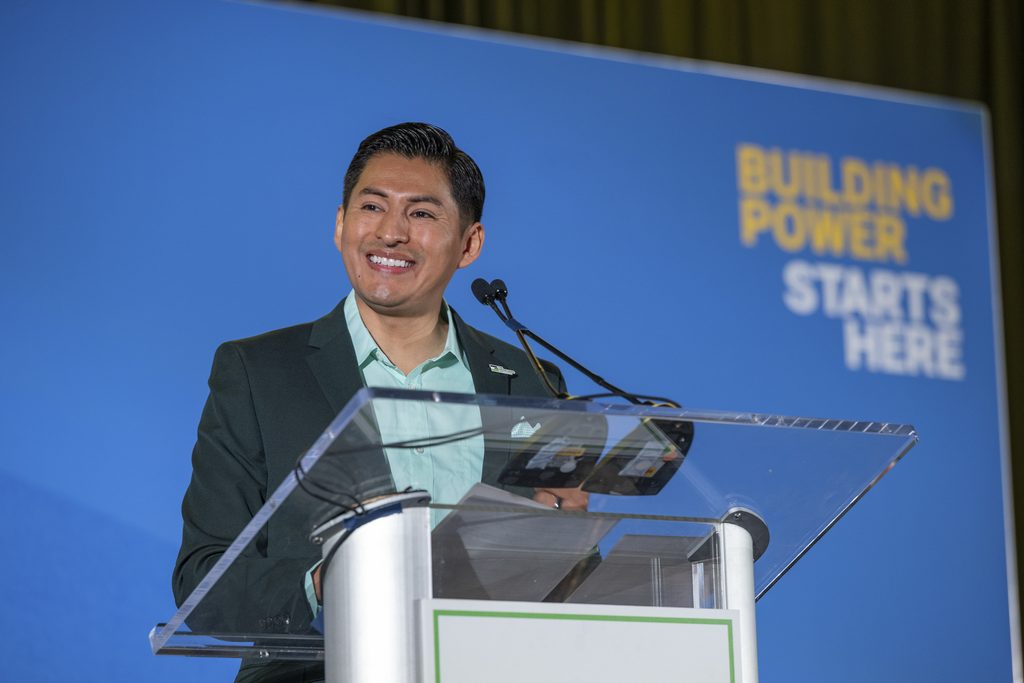
As Greenlining President and CEO Max Vargas emphasized in his opening remarks, communities of color are not waiting for someone or some institution to empower them. They already hold the wisdom, relationships, and experience needed to drive change. Our task is to connect them to strategic partners while ensuring that their voices carry greater weight in the decisions that shape daily life.
That belief is at the heart of our work to invest in people, build power, and advance policy.
A special thank you to our community of supporters, partners, and event sponsors who made Just Future Summit 2026 possible.
Event Sponsors
Anonymous, Blue Shield of California Foundation, BMO, Cathay Bank, City National Bank First Citizens Bank, JPMorgan Chase & Co., Kataly Foundation, PG&E, PNC Bank, Sierra Health Foundation, Silicon Valley Community Foundation, The James Irvine Foundation, The San Francisco Foundation, UC Berkeley College of Environmental Design
P.S. Check out our full Just Future Summit photography suite here.