
2025 Annual report
The Bridges We Build:
Community, Connection, and Change
Dear Friends and Supporters,
This past year marked my first chapter with Greenlining as a new CEO – at a moment that demanded both urgency and intention. 2025 was more than a transition year; it was a bridge between where we have been and where we must go, requiring clarity, discipline, and trust in what we are building together.
This Annual Report reflects not only a year of intentional progress, but the strength of a legacy — built over decades, shaped by leaders and staff past and present, and rooted in movements for equity that stretch back generations. That legacy is our compass that continues to guide us through this transition from where we came from to where we’re going.
We draw on the wisdom and knowledge of those who laid the foundation — from our founders to Interim President and CEO Olga Talamante, to the dedicated staff whose expertise sustains this organization – while investing in those who will carry the work forward through our Leadership Academy.
It was also a year of reflection and recalibration, anchored by an ambitious Bridge Plan. Designed to provide both direction and flexibility, the plan enabled us to respond to rapidly shifting conditions while staying grounded in our mission to transform systems that exclude communities of color.
It focused our efforts on what mattered most: defending hard-won protections, sustaining our partners, and advancing critical state-level and local progress, while continuing to build the strategies needed for long-term change.
In 2025, our theory of change held firm. You’ll see how our mission guided our work and tangible wins in 2025 in this Annual Report. What became unmistakably clear is this: Greenlining’s mission – to ensure communities are healthy, wealthy, and ready—is both our compass and our destination as we cross this bridge into the next phase of Greenlining’s legacy.
Our model — grounded in community-driven policy development and equitable implementation — delivered tangible results and reinforced our core truth: lasting progress requires both resilience and power, especially in uncertain times.
Greenlining has and always will build on the courage and vision of those before us while investing in the leaders who will carry it forward – advancing a multiracial, durable movement capable of shaping a more just future.

Max Vargas
Strengthening Our Foundation for What’s Next
2025 was a year of transition, reflection, and focus for The Greenlining Institute. This year reinforced the importance of adaptability and resilience — both within our organization and in the communities we serve. In this Annual Report, you’ll see how Greenlining is building on this foundation to deepen our impact and advance solutions that create lasting, equitable change.
The 2025 Bridge Plan
Charting a New Course Forward
In 2025, we introduced a one-year Bridge Plan to guide our work through a period of uncertainty and transition.
Founded in response to the systemic exclusion of communities of color from economic and political opportunity, Greenlining has long worked to transform inequitable systems across sectors – from finance and technology to climate and transportation. This Bridge Plan reflects a recommitment to that mission, grounded in the realities of this moment.
Designed to provide both clarity and flexibility, the plan allows us to stay focused on our core priorities while adapting to shifting political and economic conditions. It serves as both a shield – protecting communities from further harm – and a seed, laying the groundwork for the systems and solutions needed in the future.
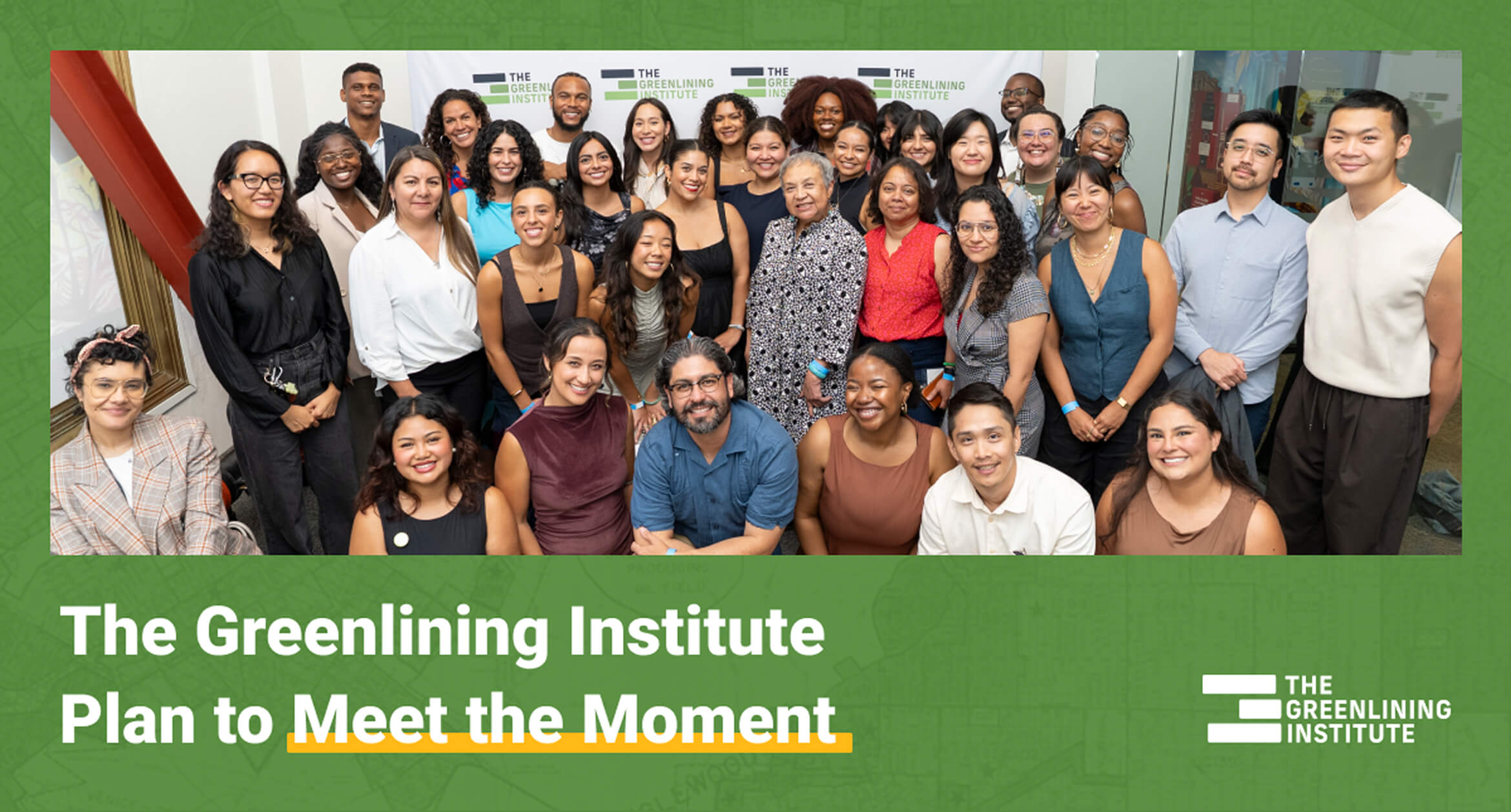
A New Chapter
Welcoming Max Vargas as President and CEO
In September 2025, The Greenlining Institute welcomed Max Vargas as President and CEO, marking a new chapter in the organization’s leadership.
Appointed by the Board of Directors, Max succeeds Olga Talamante, who served as Interim President and CEO beginning in February 2025 and provided steady leadership during a period of transition. Max brings a strong track record as an innovative leader and strategic advocate, with deep experience advancing equity and justice.
His leadership is grounded in lived experience. As a former unaccompanied minor from Peru, political asylee, and naturalized citizen, Max’s journey has shaped a lifelong commitment to centering redlined and underserved communities.
His appointment positions Greenlining to build on its legacy while advancing bold, equity-driven solutions for the future.
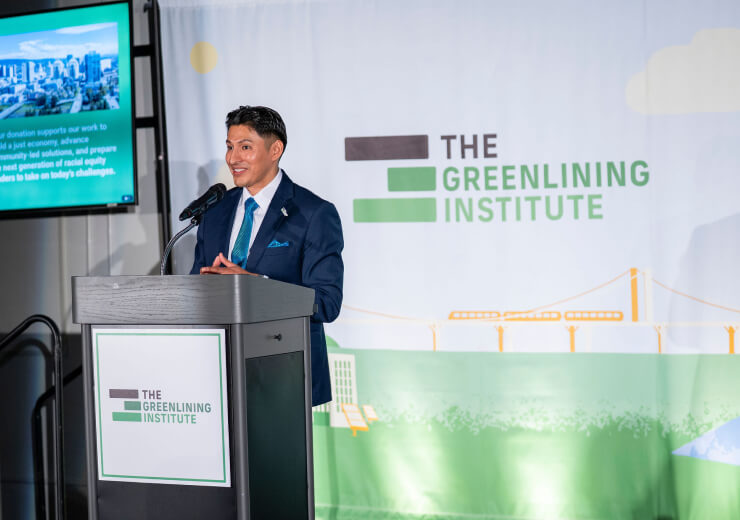
The Greenlining Institute Appoints Max Vargas as the New CEO and President
Post News Group
Read MoreImpact Area Policy Development
Protecting Progress, Advancing Equity
In 2025, Greenlining advanced policy priorities that address longstanding inequities, protect hard-fought equity gains, and respond to emerging risks facing communities of color. Across our core issue areas, Greenlining experts worked to strengthen accountability, expand access to opportunity, and ensure that systems evolving in real time do not replicate past harms.
By pairing research, coalition advocacy, and policymaker engagement, our policy team’s efforts helped move forward solutions that both responded to current challenges and laid the groundwork for more equitable systems.
CASE Study California CRA
Building Financial Accountability for California Communities
As our financial systems evolve, ensuring communities of color have equitable access to capital is essential to building economic stability and opportunity.
That’s why Greenlining supported the advancement of AB 801 (Bonta), the California Community Reinvestment Act, a critical effort to modernize and strengthen financial protections and opportunities for communities impacted by decades of redlining.
The federal Community Reinvestment Act has played an important role in expanding access to credit, but gaps in the regulatory framework – combined with the rise of financial technology companies not subject to CRA oversight – mean that many institutions continue to evade accountability for serving communities equitably.
This has left communities of color, small businesses, and low-income neighborhoods without access to capital.
AB 801 addresses these challenges by establishing a state-level framework to ensure financial institutions serve the communities where they operate fairly.
The bill expands oversight to a broader range of lenders, including fintechs, and strengthens standards for transparency and accountability.
In partnership with community-based organizations and allies, we supported the bill’s passage through the Assembly through research, coalition advocacy, and policymaker engagement. The bill will move forward as a two-year measure in the 2025–2026 legislative session.
CASE Study Cap-and-Invest
Ensuring Frontline Communities Share in California’s Climate Future
Greenlining played a key role in shaping California’s Cap-and-Invest reauthorization to ensure the program is designed to provide meaningful benefits to communities most impacted by pollution, climate change, and rising costs.
As Lolly Lim, Senior Program Manager for Climate Equity, noted, “this policy is not just about carbon markets or regulatory compliance; it has real, lasting consequences for the communities hit hardest.” The decisions made through reauthorization will shape California’s climate future for the next 20 years, making equity-centered design critical.
Through sustained engagement in the reauthorization process, we helped secure long-term funding for programs that deliver safe drinking water, affordable housing, transit, and air quality improvements in priority communities. These programs will now receive continuous funding, providing stability for community-led solutions that have historically faced inconsistent support.
We also advanced provisions to direct more utility rebates to households, helping reduce electricity costs while supporting the transition to clean energy. These investments are especially critical for low-income households already facing rising energy burdens.
At the same time, we pushed for stronger oversight and accountability measures to ensure the state meets its net-zero goals by 2045 and that polluters are held to higher standards.
Together, these changes ensure climate policy delivers not just emissions reductions, but real investments that improve affordability, strengthen resilience, and support communities that have long been left behind.

“This policy is not just about carbon markets or regulatory compliance; it has real, lasting consequences for the communities hit hardest”
Lolly Lim, Senior Program Manager for Climate Equity
CASE Study Equity in Automated Decision Systems
Ensuring Technology Expands Access, Not Inequity
As automated decision-making systems and artificial intelligence reshape access to financial systems, jobs, and essential services, we are working across the public and private sectors to ensure the rapid pace of innovation does not deepen existing inequities. Without safeguards, emerging technologies risk reinforcing longstanding patterns of discrimination against communities of color.
We advocated for AB 1018 (Bauer-Kahan) to establish stronger transparency and regulatory standards, ensuring AI and automated systems do not replicate patterns of redlining or restrict access to credit, jobs, and essential services. We also engaged decision-makers and advocates, including the California Privacy Protection Agency, California AI Working Group, and OpenAI Advisory Commission, to elevate the need for safeguards that protect vulnerable communities.
We published analyses highlighting how financial technologies and Big Tech practices can exploit communities of color – helping shape policy responses and public understanding. These efforts support a future where innovation expands opportunity rather than deepens inequity.
Greenlining in the Field
Turning What’s Possible, into Measurable Progress
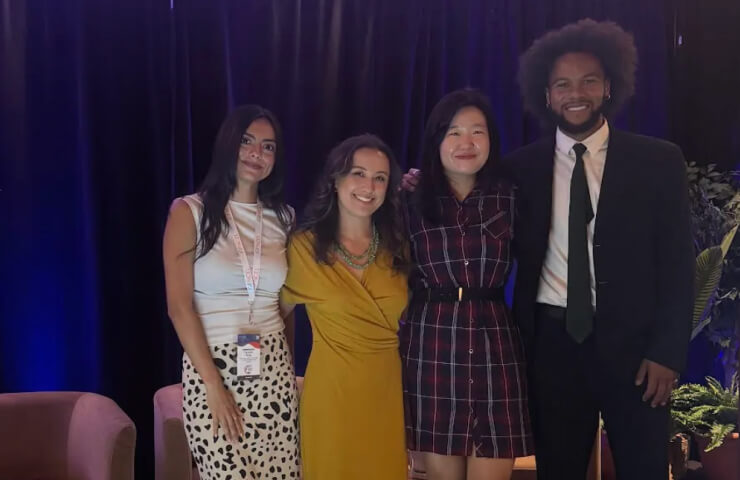
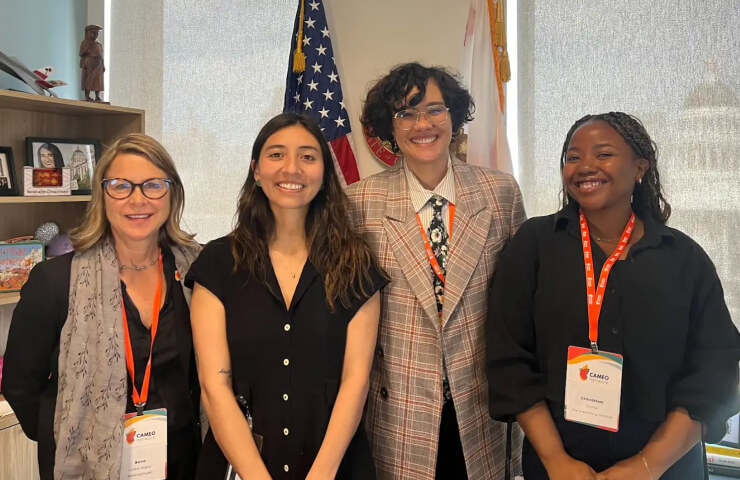
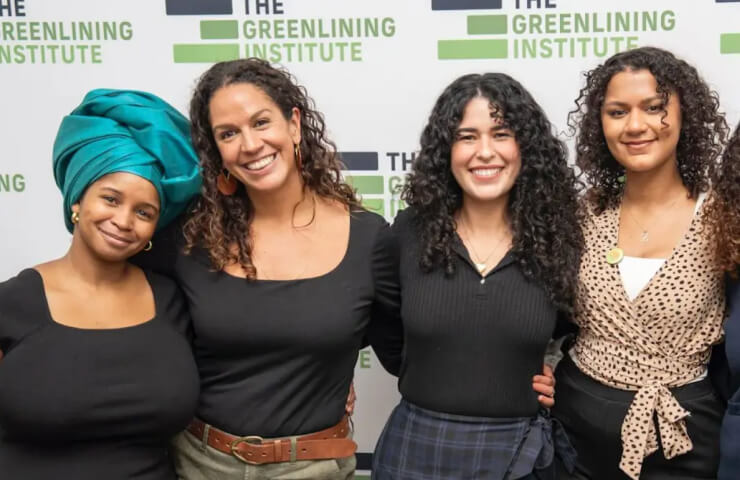
From testifying at policy hearings in Sacramento to supporting community-based capital projects in formerly redlined communities; The Greenlining Institute translated our lessons learned into successful advocacy campaigns and continued to invest bold solutions to lay the groundwork for what comes next.
Impact Area Equity Implementation
Delivering Climate and Economic Solutions That Benefit Communities
In 2025, our work focused on ensuring that hard-fought policy wins translated into tangible benefits for communities most impacted by inequity, especially as protections and investments were being clawed back at the federal level. 2025 taught us that advancing equity and creating lasting, durable policy change requires more than passing legislation – it demands equitable implementation, accountability, and sustained investment.
Across climate, transportation, and financial systems, we worked to shape how programs are funded, designed, and delivered so resources reach the communities they are intended to serve. From securing long-term climate investments to advancing equitable transportation and financial practices, this work centered on affordability, resilience, and community-driven solutions at every stage.
Spotlight Legislative Advocacy
Turning Climate Funding into Community Impact
In a budget year defined by fiscal constraints and competing priorities, Greenlining helped protect and advance climate investments designed to deliver tangible benefits to communities most impacted by pollution and disinvestment.
Through sustained advocacy, we worked to ensure equity remained central in California’s climate budget decisions, including the implementation of Proposition 4, California’s climate bond. We pushed leaders to prioritize programs that meet both immediate needs and long-term community priorities, including community-led climate planning, resilience hubs, clean transportation programs, and charging infrastructure that can help improve air quality, expand access to clean mobility, and strengthen neighborhood resilience.
We also worked to shift how infrastructure dollars are spent, helping redirect investments away from highway expansion and toward electric truck charging infrastructure. This marked an important step toward reducing pollution in communities that have long borne the brunt of freight activity.
Together, these wins show what it looks like to align climate funding with community priorities: reducing pollution, lowering everyday costs, expanding access to cleaner transportation, and building a more equitable and sustainable future.
StreetSmart Episode 8: Greenlining Institute’s Hana Creger
Streetsblog CAL
Read MoreBudget Wins
-
$1M
Secured in technical assistance funding for the Transformative Climate Communities program through Proposition 4 funds. -
$60M
Helped advance for clean transportation programs and EV charging infrastructure. -
$500K
Secured for the Community Resilience Centers program through Proposition 4 funds. -
$94M
Helped redirect $94 million through the Trade Corridor Enhancement Program from highway expansion to electric truck charging infrastructure.
CASE Study Mobility Equity
Stopping Displacement and Reimagining Transportation Investment
Greenlining’s Climate Equity team launched Homes Before Highwaysa campaign and data tool exposing the human, economic, and environmental costs of California’s ongoing highway expansion projects.
We led research and analysis documenting how highway expansion continues to target communities of color and low-income neighborhoods – demolishing homes, displacing families, and worsening air quality – while failing to deliver on promised benefits like reduced congestion.
With the campaign, policy experts introduced an interactive tracking tool that makes the disparate impacts visible, equipping advocates, policymakers, and the public with data to understand how more than 200 planned highway projects intersect with the state’s housing, affordability, and climate crises.
Through this work, Greenlining is advancing a clear call to action: stop investing in projects that destroy homes and deepen inequities, and instead prioritize transportation solutions that protect communities and make life more affordable.

“California’s elected leaders face an urgent and fundamental choice: They can continue spending billions on expansions that exacerbate the housing crisis but never deliver meaningful traffic relief; or they can invest in a transportation system that reflects values Californians champion: affordability and community wellbeing,”
Hana Creger, Associate Director and Yesenia Perez, Senior Program Manager in Calmatters
CASE Study Equitable Transportation
Fighting for Equity in Transportation Decisions
Greenlining’s policy experts continued to fight for transportation decisions that protect our communities’ health, advance climate justice, and ensure the transition to clean mobility reaches the people most burdened by pollution.
As federal leaders moved to weaken clean air protections, including California’s authority to set stronger vehicle emissions standards, we worked alongside environmental justice and clean transportation partnersto defend the right of communities of color and low-income communities to breathe clean air.
At the same time, we pushed California leaders to maintain equity commitments in the state’s transition to cleaner transportation. Through the Charge Ahead California Campaign, Greenlining submitted joint recommendations to the California Air Resources Board calling for policies and investments that equitably advance the state’s zero-emission vehicle transition and expand access to clean mobility for the most pollution-burdened Californians.
Transportation advocacy focused on ensuring funding and regulatory decisions reflect the needs of communities most impacted by pollution, disinvestment, and rising costs. This work contributed to more accountable policies that reduce emissions, lower costs, and expand access to clean transportation.

“The impact is going to be felt by the low-income disadvantaged communities and communities of color. We have an opportunity to continue to push on ensuring that we’re creating a healthier, more equitable future for our communities and by denying these waivers, we’re doing the opposite,”
Román Partida-López told KQED in response to federal attempts to rollback waivers that allowed California to set its own clean air standards.
CASE Study Transportation Equity
Building a National Movement for Clean, Affordable Transportation with CleanRIDES
We supported the launch of the CleanRIDES Network, marking a major step forward in shifting transportation systems toward equity, affordability, and sustainability.
As part of the network’s core team, we helped guide strategy, fundraising, and work planning with a racial equity lens – ensuring that priorities reflect the needs of communities most impacted by pollution, disinvestment, and high transportation costs. The network brings together more than 100 organizations across climate, transit, labor, housing, business, and public health to align around a shared vision for cleaner, more affordable transportation.
Alongside the launch, the network released a national policy analysis outlining how state-level reforms can reduce pollution, lower costs, and improve mobility. The findings show that shifting investments toward transit, active transportation, and electrification can significantly cut climate emissions, reduce time spent in traffic, and save households money each year. As Hana Creger, Associate Director of Climate Equity, noted, “a clean, affordable transportation system is key to thriving communities and a strong economy.”
This work comes at a critical moment. Despite California’s climate leadership, transportation investments continue to prioritize highway expansion, driving up costs and worsening pollution in communities of color. The CleanRIDES Network is advancing policies that redirect funding toward solutions that are more equitable, sustainable, and cost-effective.
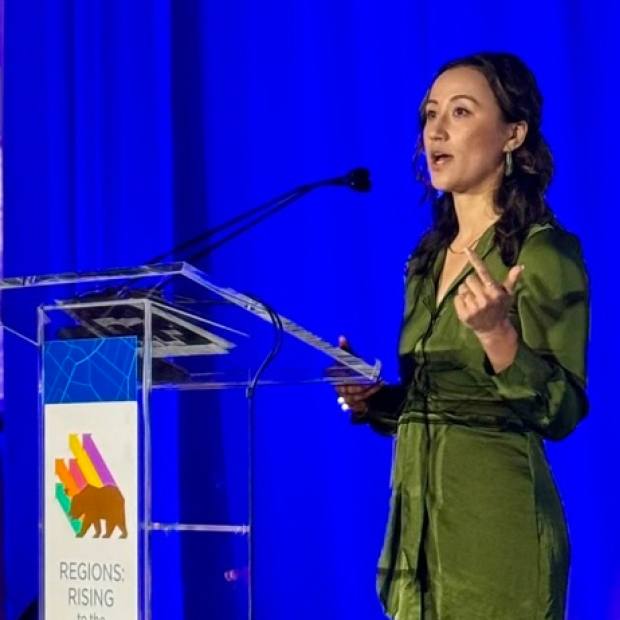
“A clean, affordable transportation system is key to thriving communities and a strong economy.”
Hana Creger, Associate Director of Climate Equity
New Network Sets Out to Reform State DOTs
Streetsblog CAL
Read MoreBanking and Finance
Setting the Standard for Better Banking
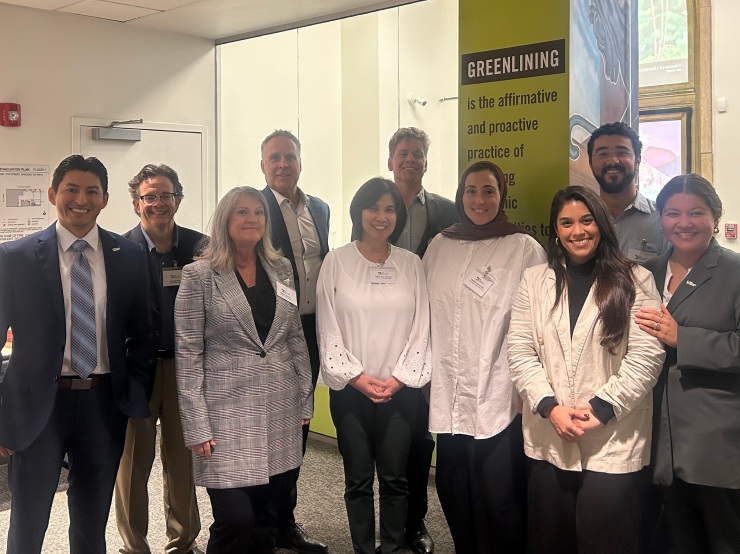
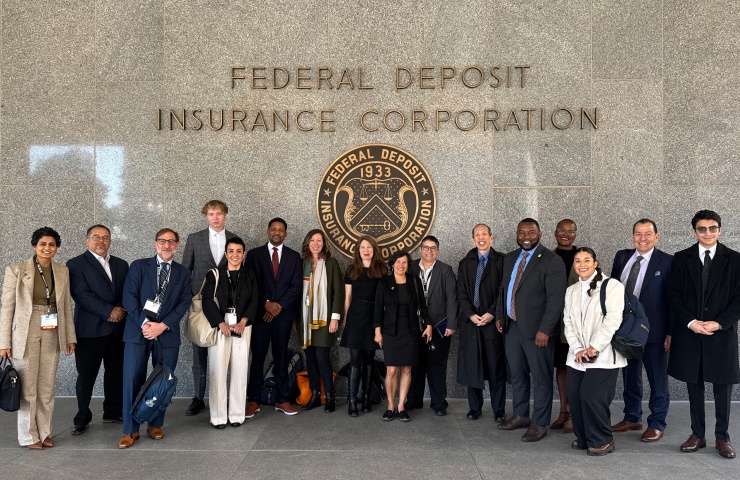
Greenlining’s Economic Equity team collaborated with financial institutions, advocates, and community partners to develop a set of standards for banks designed to embed equity into banking practices.
Throughout the year, we engaged 16 partners and community-based organizations to ground the development of the standards in the lived experiences of communities of color, ensuring the framework reflects real barriers to access and affordability. Building on that foundation, we hosted a convening in October 2025 with targeted financial institutions to gather input on implementation and feasibility.
The convening created space for direct dialogue between banks, community advocates, and coalition members – surfacing both the opportunities and challenges of aligning financial practices with equity goals. As Erica Plasencia, Senior Program Manager for Economic Equity and lead author of the Greenlined Banking Standards, writes, the standards are “a blueprint for financial institutions to ensure that banking products, services, and practices directly confront long-standing barriers to access and affordability.”
Discussions focused on how institutions can move beyond commitments and toward measurable changes in products, services, and investment strategies that better serve underserved communities. This approach reflects a broader goal: ensuring that racial equity is not treated as an add-on, but embedded into how financial systems operate.
The Greenlined Banking Standards will be released in Summer 2026, with implementation focused on accountability, data transparency, and sustained partnership with financial institutions and community stakeholders.
Spotlight Homeownership
Building on 15 Years of Home Lending Data Analysis
We released an analysis of 2024 home lending data in October 2025 that highlighted persistent racial disparities limiting access to homeownership for communities of color across California. This analysis builds on nearly a decade of work analyzing California’s annual home lending data reported under the federal Home Mortgage Disclosure Act since 2015.
The findings underscored how longstanding patterns of discrimination remain embedded in financial systems, with communities of color facing disproportionate barriers to accessing mortgage credit. As Rami Ibrahim, Program Manager for Economic Equity and lead author of the analysis, notes, “These disparities are not new, but they remain deeply entrenched – and without stronger accountability, financial institutions will continue to fall short in meeting the needs of communities of color.”
This work helped build the case for stronger state-level action. The report called for the creation of a California Community Reinvestment Act to address gaps in federal oversight and ensure that financial institutions are meeting the needs of all communities.
Building on this analysis, AB 801 (Bonta) was introduced in 2025 to establish a state-level CRA framework for accountability in lending practices.
Together, this research and advocacy reflect a coordinated effort to pair data with policy solutions – making clear that addressing racial disparities in home lending requires both transparency and structural change.
Climate Finance
Holding the Line on Climate Finance and Equity
Climate finance – funding that invests in climate change solutions – faced significant setbacks in 2025, as federal rollbacks weakened key investments as well as protections, including climate risk guidance for banks, climate disclosure requirements, and Community Reinvestment Act regulations that would have incentivized investments in disaster recovery.
In response, we focused on advancing solutions at the state level. This included supporting California’s efforts to lead on corporate climate disclosure requirements, helping ensure that financial risks tied to climate impacts are more transparent and better accounted for.
We also continued to elevate growing concerns around bluelining – the emerging pattern of insurers and financial institutions withdrawing from communities most exposed to climate risk.
We brought national attention to these risks through a Shelterforce op-ed co-authored by Monica Palmeira and Sharon Cornelissen, Director of Housing at the Consumer Federation of America, which highlighted how climate-driven insurance practices can replicate historic discrimination. As Palmeira and Cornelissen note, “The same communities that were redlined in the past are now at risk of being ‘bluelined’ – priced out or shut out of insurance markets altogether.”
We also presented this research at national conferences and began advancing a new campaign focused on increasing insurer investments in community climate resilience in California – working to ensure that financial systems support, rather than abandon, communities facing the greatest climate risks.
Impact Area Capacity Building
Transforming Capacity into Power
Capacity building efforts focused on strengthening networks, relationships, and tools needed to advance equitable solutions at scale. In short, it’s about building power.
By convening partners and supporting community-based organizations, Greenlining builds collective capacity across sectors. This work ensures communities most impacted by inequities have the resources and support needed to shape solutions and drive implementation.
In a rapidly changing landscape, collaboration remains essential to sustaining progress and advancing long-term systems change.
CASE Study Systems Change
Blueprints for Change: Laying the Groundwork for Equitable Investments
In October 2025, we co-hosted the Blueprints for Change convening with the Urban Sustainability Directors Network and Upright Consulting Services, bringing together federal, state, and community leaders to examine how infrastructure investments reach communities of color and historically redlined neighborhoods.
As funding from the Inflation Reduction Act and Bipartisan Infrastructure Law was cut short, the convening created a critical space to reflect on early implementation efforts. Participants identified both promising practices and persistent barriers, particularly the lack of support for community-based organizations tasked with delivering projects on the ground.
Discussions highlighted a clear gap between top-down investments and community readiness. After decades of disinvestment, communities need more than funding – they need early support to build capacity, leadership, and systems.
Insights from this convening will inform a forthcoming report with recommendations to strengthen equitable infrastructure investment.

“The case studies show that community-led projects are most successful when partners have the time, trust, political and technical support, and flexible resources to build from local priorities. These examples demonstrate what becomes possible when investments strengthen local capacity instead of bypassing it.”
Morokot Uy, Sr. Capacity Building Program Manager and Blueprints for Change report author
Spotlight Equity Lab
Designing Community Benefits That Deliver
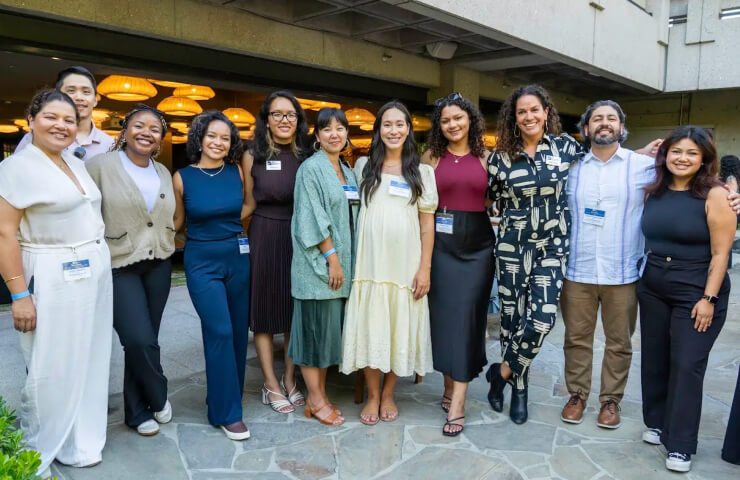
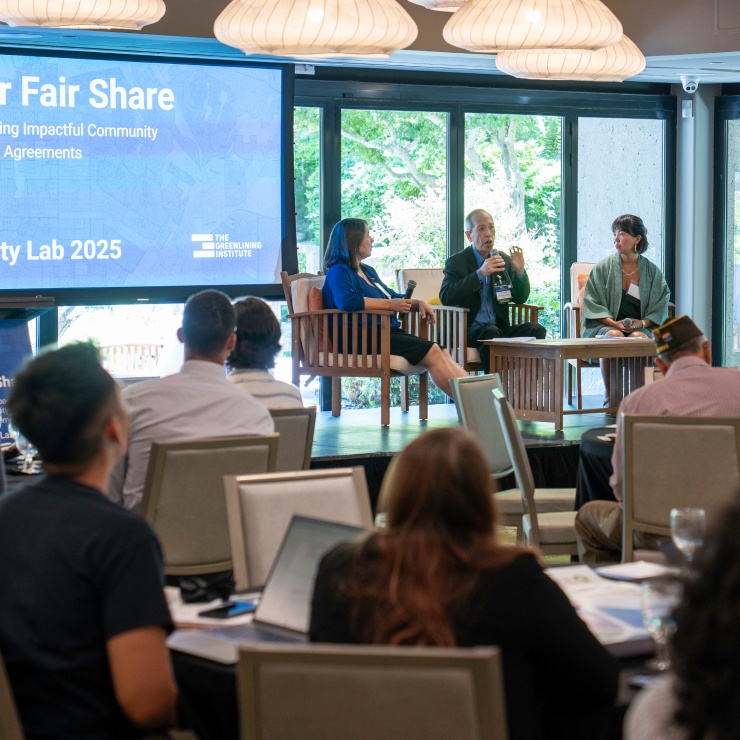
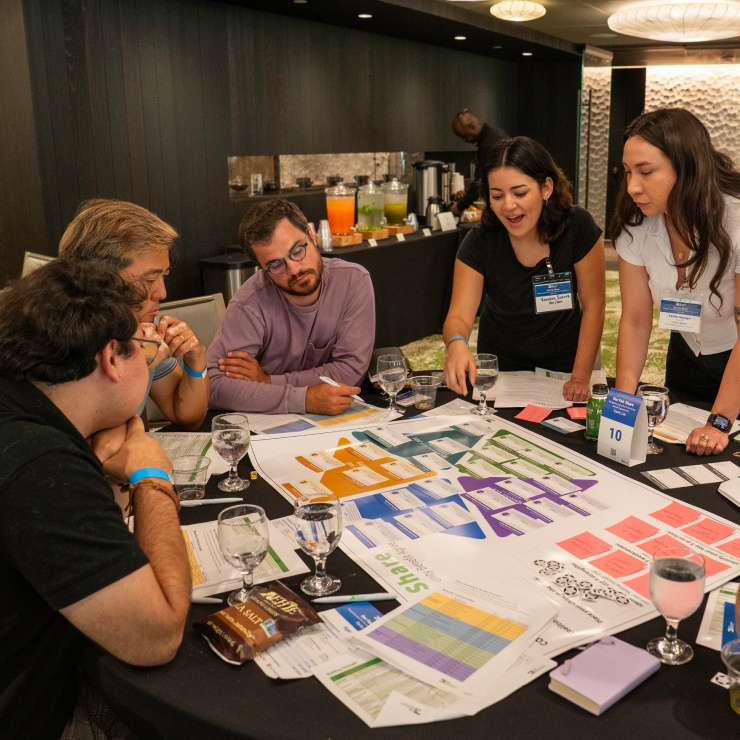
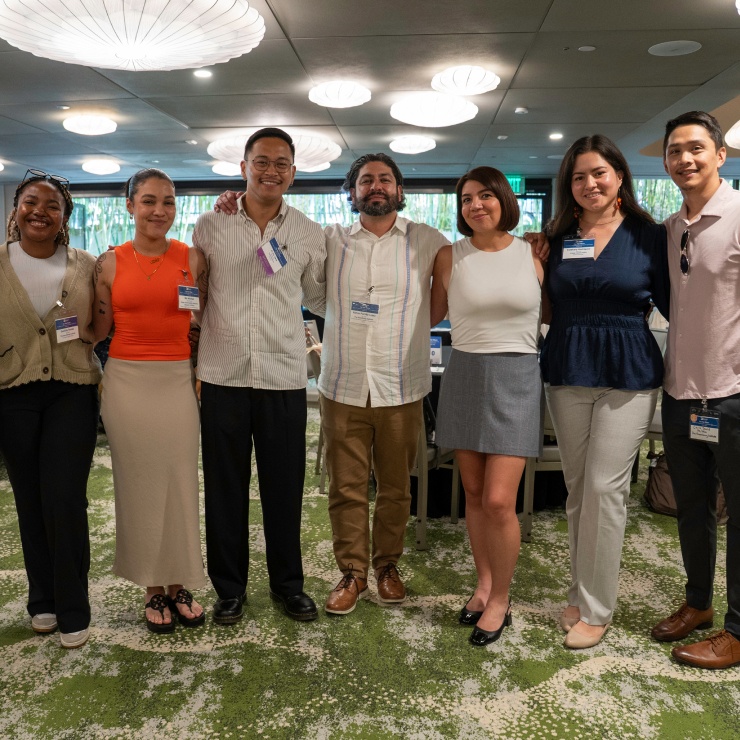
In July, we hosted our Equity Lab in Los Angeles, bringing together equity advocates, practitioners, partners, and community members for a solutions-oriented workshop focused on advancing more effective community benefit agreements.
Centered on the theme Our Fair Share: Designing Impactful Community Benefit Agreementsd, the convening created space for participants across sectors – including finance, community advocacy, and grassroots organizing – to share experiences, identify challenges, and develop strategies to strengthen how these agreements are structured and enforced. Community benefit agreements are a critical tool for ensuring that large-scale investments deliver tangible benefits to the communities most impacted, but too often fall short without strong accountability and early community input.
The Equity Lab focused on bridging that gap. Through interactive, group-based sessions, participants worked through real-world scenarios and collaboratively designed approaches that center community priorities throughout the development process.
Participants left with practical tools, shared strategies, and a clearer path for ensuring that future development projects deliver meaningful, enforceable benefits to the communities they are intended to serve.
Spotlight Greenlining the Block
Unlocking Capital for Community-Led Climate Solutions
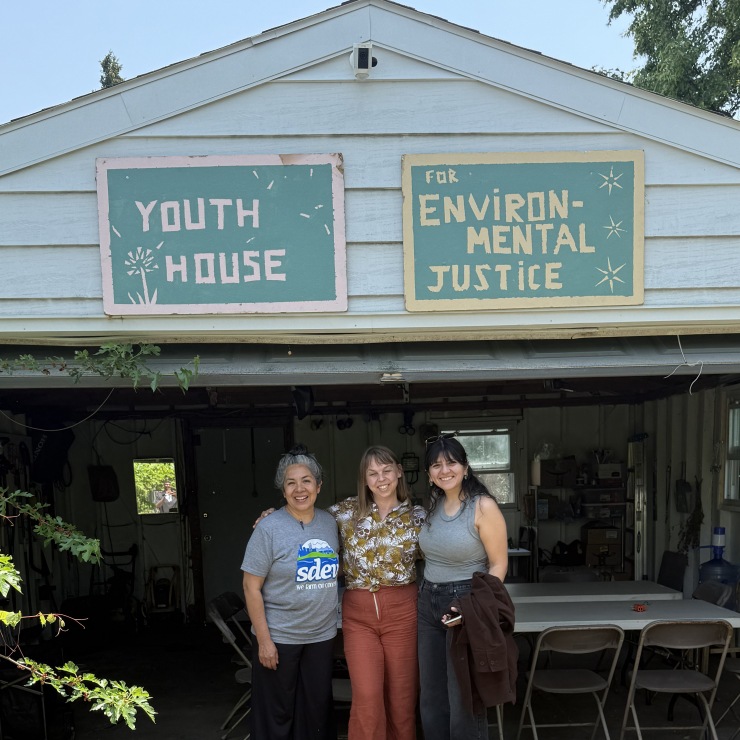
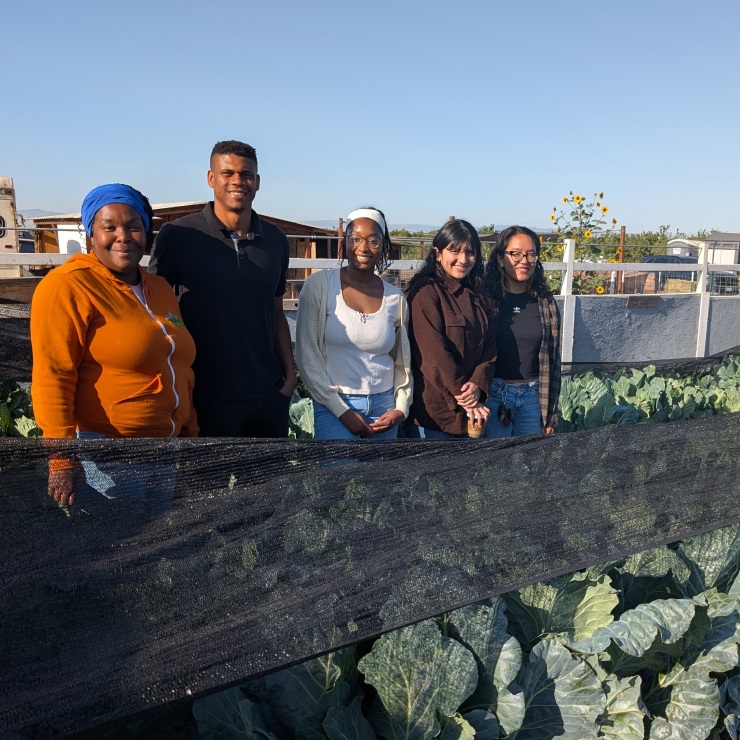
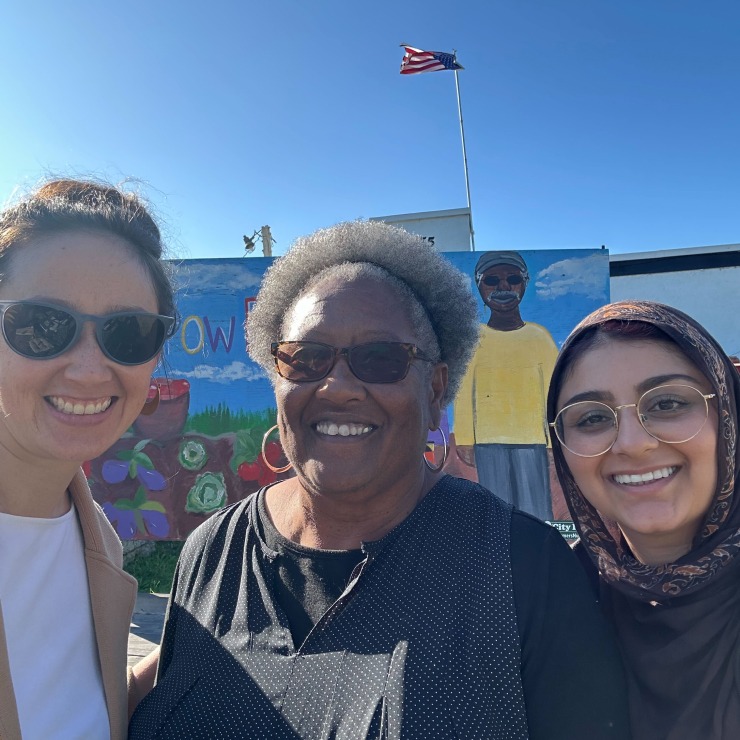
Through Greenlining the Block, we supported community-based organizations in moving climate and resilience projects from early concept to implementation.
We supported 24 partner projects helping unlock over $100 million in additional funding to advance community-led climate capital projects, despite the clawbacks of billions in critical climate investments at the federal level. These projects are designed to bring transformative change to communities by expanding access to climate-resilient infrastructure, clean energy, and community-centered spaces.
A key milestone this year was closing Little Manila Rising’s $6.5 million capital stack to fully finance a new 7,000-square-foot Community Resilience Hub in South Stockton.
This included Greenlining’s first $200,000 impact investment loan, marking an important step in expanding the tools available to support community-driven development. Construction is set to begin next year.
Through technical assistance and capacity building, Greenlining’s team supported Greenlining the Block partners to secure multiple property purchases and controlled sites, ensuring that projects could move into pre-construction readiness. In parallel, we funded, executed, and coached 20 partners to scope and implement deliverable-based technical consultant grants, and facilitated vendor procurements to support partners to advance design, capital stacking, property control, and organizational capacity.
This work is helping communities of color build the infrastructure, resources, and leadership needed to drive equitable climate solutions at scale.
Impact Area Systems Change
Centering Racial Equity Across Systems & Solutions
Racial equity remains at the core of Greenlining’s work, shaping how we understand challenges, design solutions, and measure impact.
In 2025, that work faced a rapidly shifting political and cultural landscape, as federal actions and anti-DEI rhetoric sought to pressure agencies, institutions, and decision-makers to retreat from equity-centered policies and programs. Across Greenlining’s teams, we worked with partners and allies to understand what these changes mean in practice and develop actionable strategies to strengthen equity protections.
Together, we focused on embedding equity into policies, programs, and practices while defending hard-fought gains and ensuring racial equity remains central to climate, economic, and community development solutions.
Spotlight Maintaining Equity in a Shifting Climate Landscape
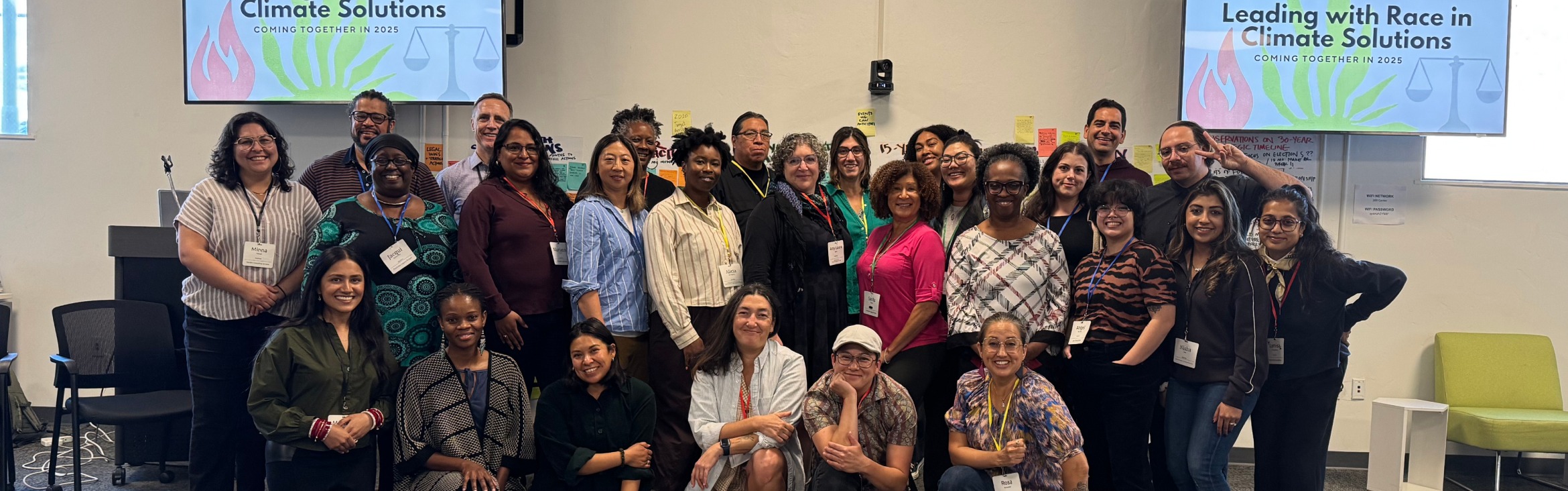
Leading with Race in Climate Solutions Convening
Leading With Race in Climate Solutions is a collaborative project of Just Solutions, The Greenlining Institute, The Chisholm Legacy Project, Urban Sustainability Directors Network, Facilitating Power, and Upright Consulting Services.
Greenlining’s Senior Program Manager for Racial Equity, Maria Barakat, moderated a webinar with Leading With Race partners to unpack what the federal administration’s anti-DEI actions mean for organizations and advocates advancing equity-first climate solutions.
Featuring insights from Jacqui Patterson of The Chisholm Legacy Project and Dorcas Gilmore, Esq. of Gilmore Khandhar, LLC, the session brought together advocates, policymakers, and grassroots leaders to examine the shifting legal and political landscape and identify strategies for moving forward.
Participants discussed concrete ways to respond to growing opposition, from strengthening equity-centered policy strategies to protecting programs that support frontline communities. The session also highlighted how grassroots organizations are continuing to build resilience, safeguard their communities, and push forward despite mounting political attacks.
At a time when racial equity work is being challenged across sectors, this webinar created an important space for shared learning, strategic alignment, and collective resolve. It reinforced that leading with race is not only a legal or political question, but a necessary framework for building climate solutions that are just, durable, and responsive to the communities most affected by climate change.
CASE Study California Racial Equity Coalition
Building a More Equitable California Government
The California Racial Equity Commission finalized its framework marking a major step toward embedding racial equity into how state government operates. Greenlining played an active role in shaping this effort over multiple years, contributing policy expertise and helping ensure the framework reflects the lived experiences of communities of color. Our engagement focused on strengthening accountability and advancing tools that move beyond high-level commitments – supporting agencies in setting measurable goals, using data to assess impact, and tracking progress over time.
The Commission was established following Executive Order N-16-22, signed by Governor Newsom in 2022, which mandated that state agencies take concrete steps to address demonstrable inequities, laying the groundwork for a more coordinated, statewide approach to advancing equity.
The Commission was tasked with developing a framework to guide how agencies identify disparities, engage communities, and integrate equity into policy design and implementation. The final framework creates a foundation for more consistent and transparent approaches to equity across state government, helping move California toward systems that are designed to serve all communities more equitably.
Impact Area Leadership Academy
Future Leaders, Lasting Impact
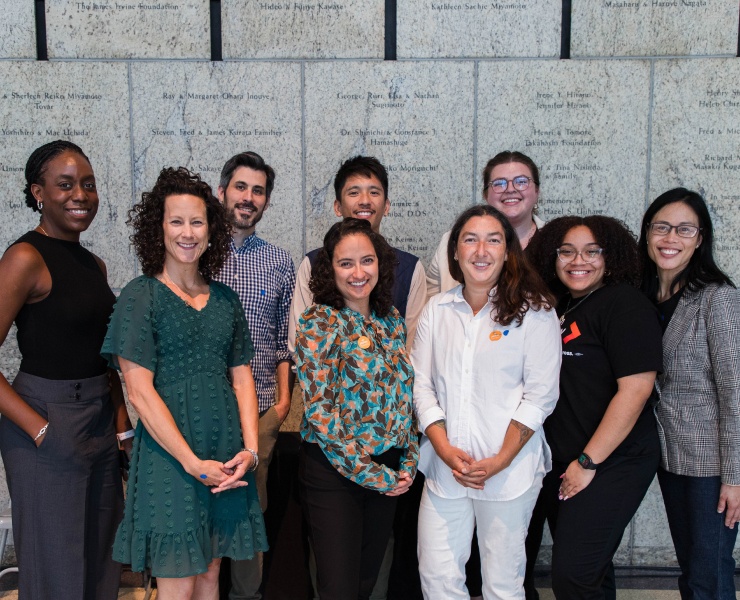
Greenlining’s Leadership Academy is a cornerstone of our work to build long-term power in communities of color. By investing in emerging leaders, the program helps create pathways into policy, advocacy, and systems change work that have historically excluded these voices.
In 2025, the Leadership Academy continued to evolve to meet the needs of a changing landscape, strengthening how we support fellows as they navigate and transform complex systems. Through training, mentorship, and hands-on experience, the Academy equips leaders with the skills, networks, and perspective needed to advance equitable solutions and drive lasting change in their communities and beyond.
Testimonial

“Never have I ever experienced so much passion, compassion, empathy, and dedication in the work place, inspiring me beyond anything that I could have possibly imagined before I set foot in the building.”
Gyasi PigottClimate Equity Fellow

“The fellowship truly brought incredibly sharp and committed colleagues, who’ve become an important part of my community…who challenge me, help me grow, and share meaningful camaraderie together.”
Dohee KimLegislative Fellow

“I was able to take ownership…and build a foundation of knowledge on my area of work and learn how to communicate about it well.”
Angel LinTechnology Equity Fellow
Spotlight Academy Alumni Association
Strengthening the Leadership Academy for Long-Term Impact
Strengthening the Leadership Academy in 2025 required both reflection and investment – ensuring the program continues to meet the needs of emerging leaders in a changing landscape.
We advanced alumni engagement and conducted a comprehensive landscape analysis of leadership development programs to inform improvements in curriculum design, supervision, and recruitment. This work was supported by external consultants, helping ground our approach in best practices from across the field.
We strengthened internal team capacity and began recruiting a new Leadership Academy Program Director to help shape the program’s next phase. We also began developing an enhanced measurement and evaluation strategy to assess past performance, identify opportunities for growth, and better quantify long-term impact.
Alumni engagement remained a key priority. In partnership with the Greenlining Academy Alumni Association, we supported two networking events in July and October, bringing together 30 and 75 alumni, respectively. These gatherings created space for reconnection, professional development, and informal program evaluation, as alumni reflected on their experiences and continued to build community.
Together, these efforts are positioning the Leadership Academy to deepen its impact – strengthening how we support leaders as they enter, navigate, and transform the systems that shape outcomes for communities of color.
CASE Study Casa Joaquin Murrieta
Cultivating Early Skills for Lasting Leadership
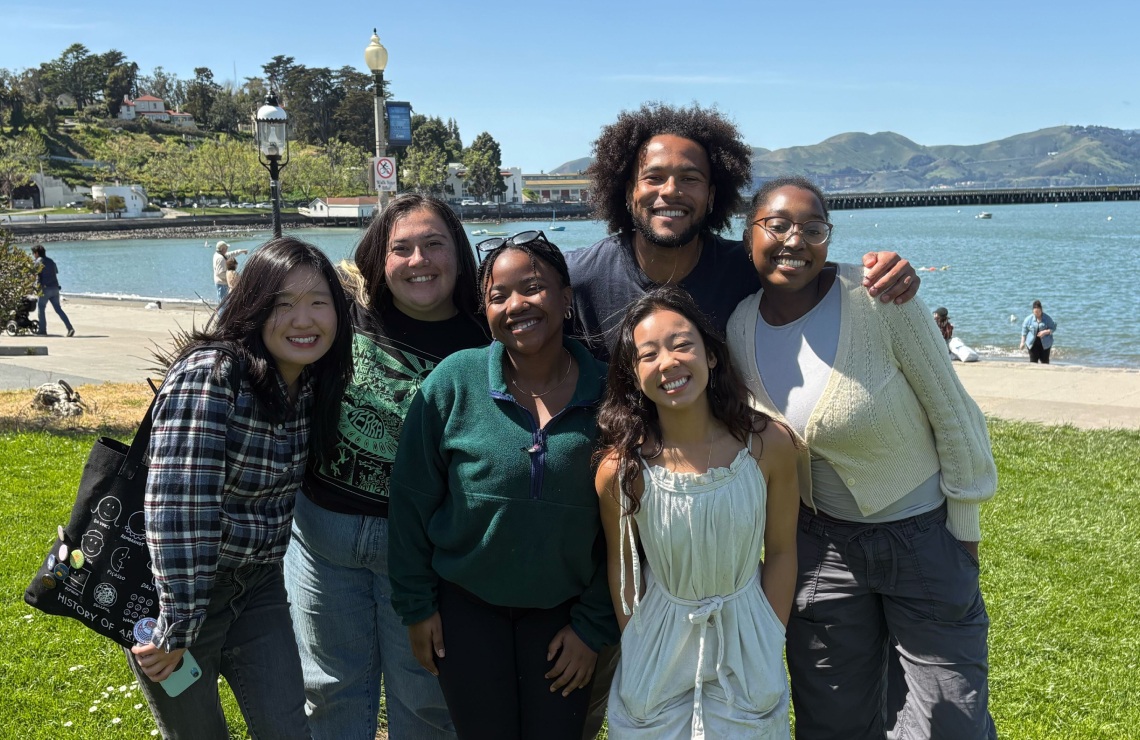
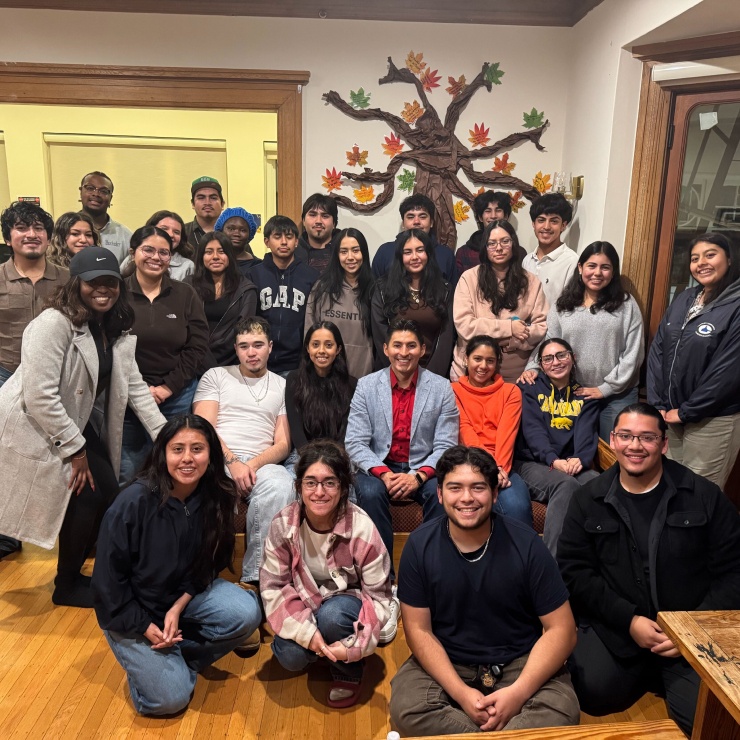
Casa Joaquin Murrieta continued to serve as a multiethnic residential leadership program for first-generation UC Berkeley students, supporting 26 emerging leaders during the 2024–2025 academic year.
All participants were paired with a mentor, continuing the Academy’s more than three-decade commitment to building the next generation of leaders. Throughout the year, Casistas engaged in professional and leadership development through 17 workshops covering topics such as effective communication, financial literacy, and time management, alongside 13 social and community-building events.
Over the course of the program, participants demonstrated increased confidence across key leadership competencies, including public speaking, project management, and advocacy. These experiences provide a strong foundation for participants as they continue into careers and roles that advance equity and opportunity in their communities.
Spotlight Fellowship Program
Supporting Fellows to Lead and Advance Policy Change
The Leadership Academy Fellowship equipped emerging leaders with the skills, experience, and networks needed to lead and advance policy change.
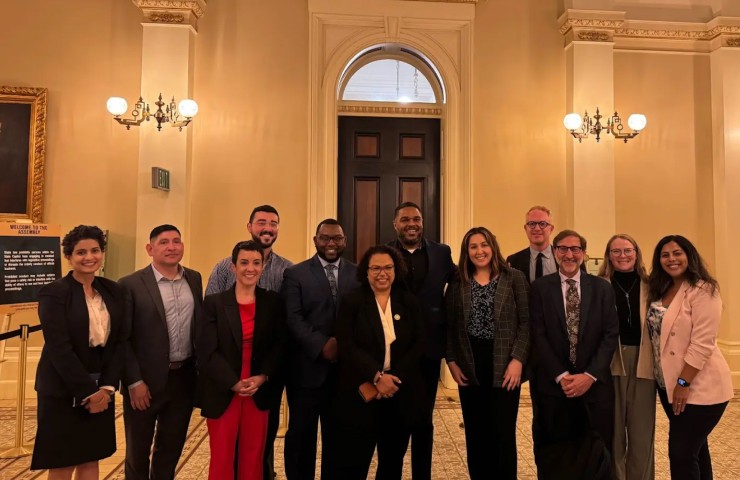
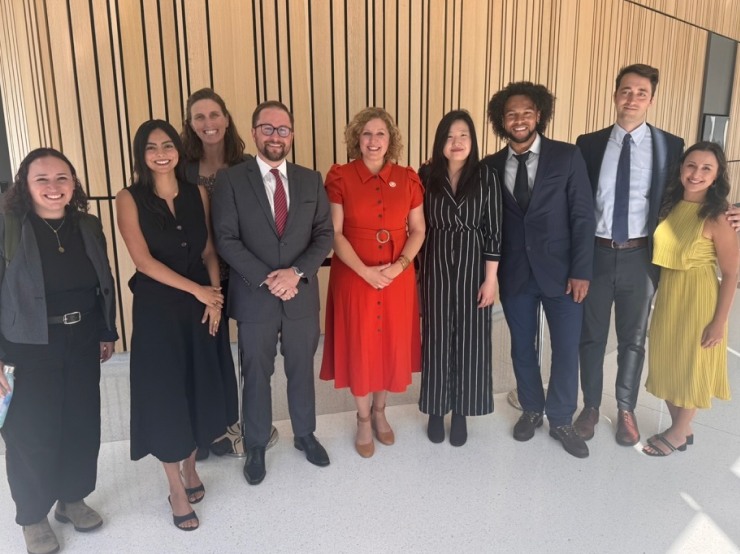
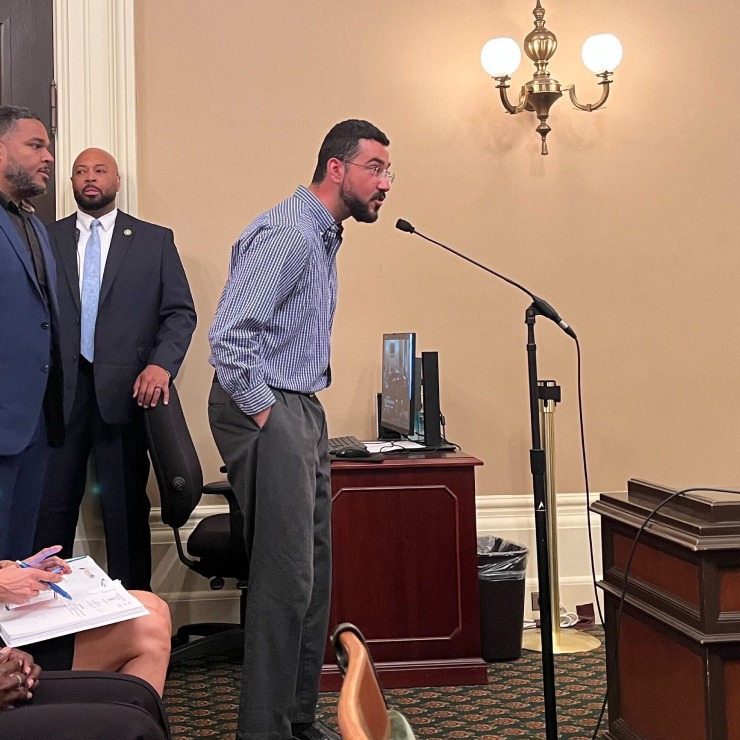
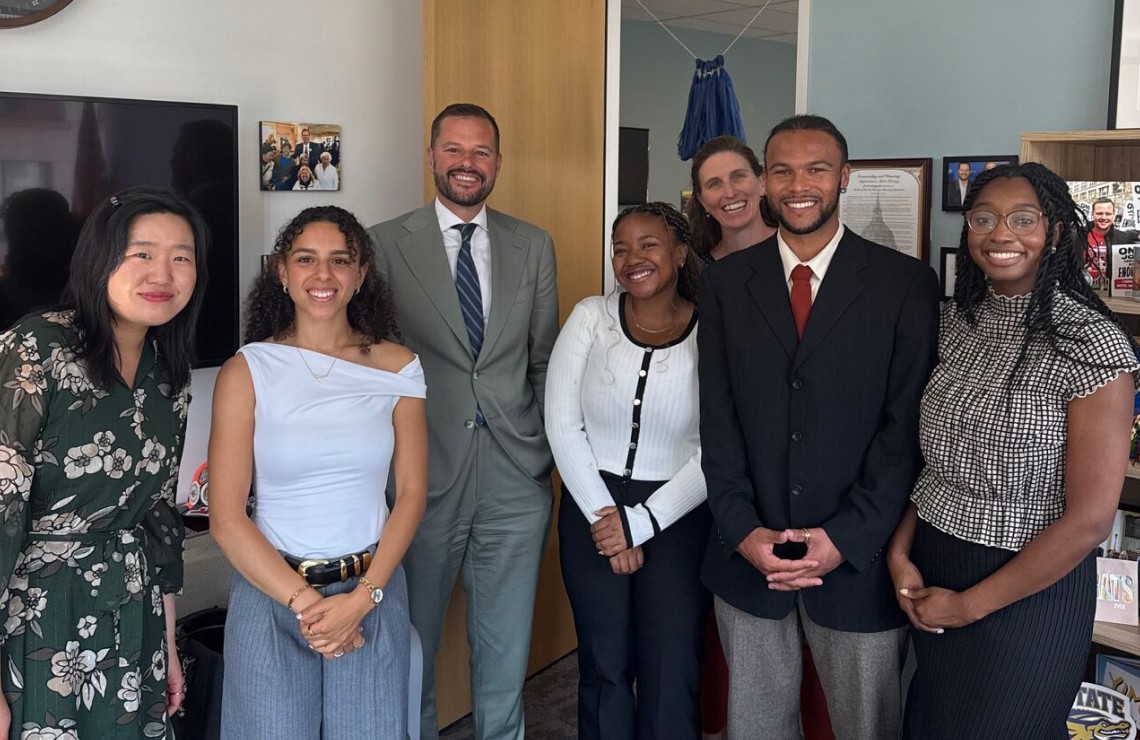
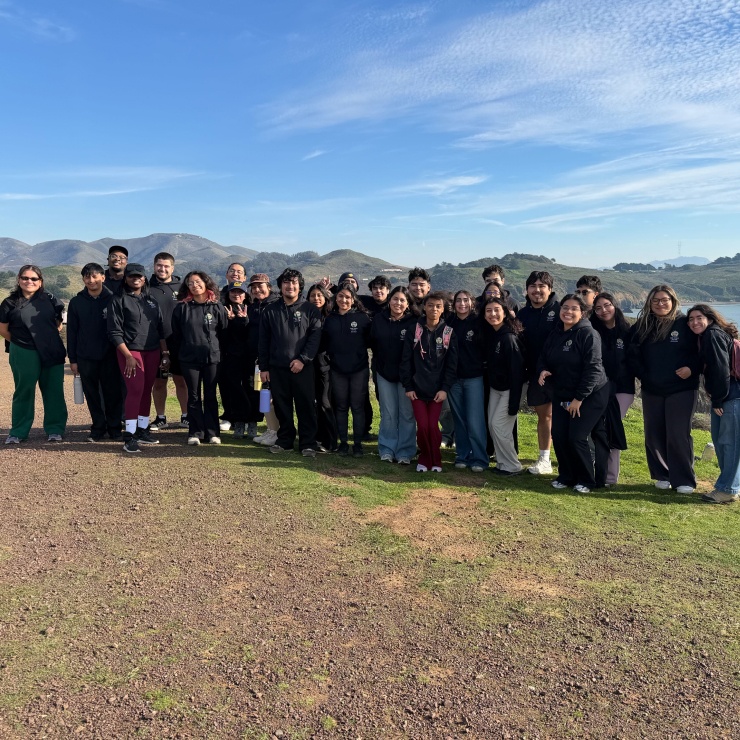
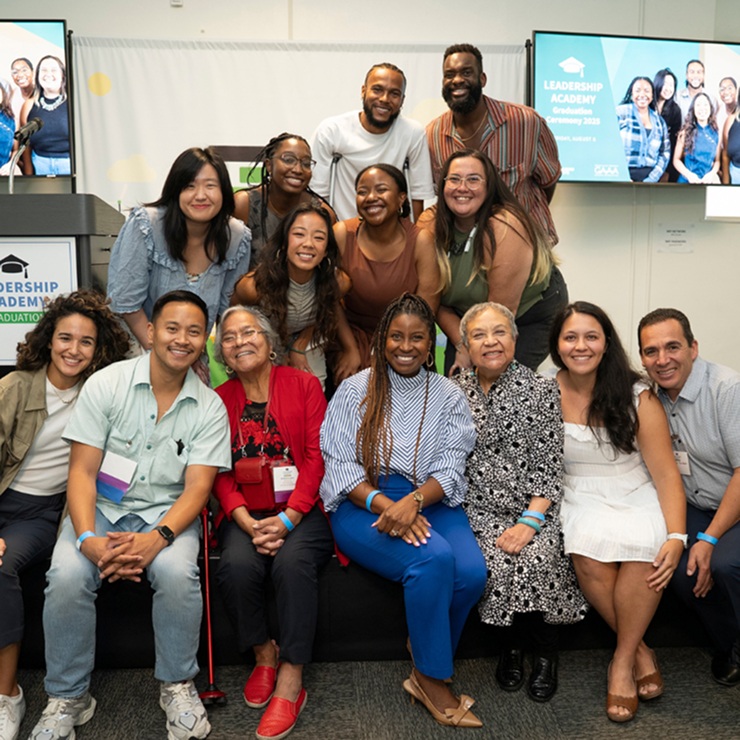
The 2024–2025 Fellowship supported six fellows through an intensive 11-month program focused on professional development, policy advocacy, and leadership growth. Fellows applied their skills in real-world settings, including speaking at conferences, participating in Greenlining’s Equity Lab in Los Angeles, and providing public testimony at the State Capitol in support of legislative priorities, including our Homes Before Highways campaign.
They also contributed to Greenlining’s policy agenda, producing blogs and comment letters while working closely with policy teams and coalition partners.
The cohort celebrated graduation in August 2025 alongside the Greenlining Academy Alumni Association. The event raised $20,000 with support from Cathay Bank and First Citizens Bank and strengthened connections across the alumni network.
WHO WE ARE
Board and Staff Demographics
The Greenlining Institute is a diverse team of changemakers deeply committed to advancing race-conscious solutions that create lasting systems change.
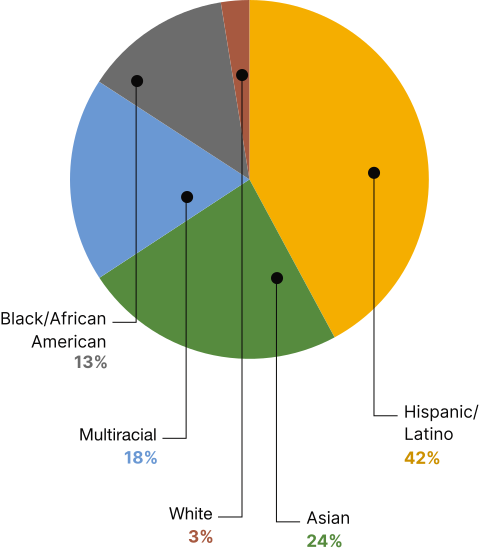
Majority of Greenlining staff identify as people of color and women. This diversity is reflected across every level of the organization, including our executive leadership team and Board of Directors.
As we continue to grow and evolve, The Greenlining Institute will continue to foster a workplace where diverse perspectives, lived experiences, and expertise strengthen our work. Together, our team is building a future where race is never a barrier to opportunity and communities of color have the power, resources, and resilience to thrive.
-
Staff Race/Ethnicity Makeup
Our Board of Directors as of 2025
Tunua Thrash-Ntuk
The Center by Lendistry, CEO and President, Board Co-ChairNoemí Otilia Osuna Gallardo
California Energy Commission, Commissioner, Board Co-ChairOlga Talamante
Chicana Latina Foundation Executive Director EmeritaOrtensia Lopez
El Concilio of San Mateo County, RetiredTate Hill II
Access Plus Capital, Executive Director, Board TreasurerAshley Gerrity
GRID Alternatives, SOMAH Program Manager, GAAA Board ChairDarlene Mar
Council of Asian American Business AssociationsJasper Cacananta
Comcast, Assistant Deputy General CounselJohn Christian De Vera
Hirsch Philanthropy Partners, Director, Board SecretaryJose Antonio Ramirez
Community Development Inc, PresidentLida Aljabar
American Forests, Senior DirectorMark Rutledge
Salesforce, DirectorFinancials
2025 Financials
The 2025 financial statements reflect the consolidated financial position of The Greenlining Institute and Equity Works, a nonprofit entity established in 2015 to purchase Greenlining’s headquarters and support the organization’s long-term mission.
Despite the challenging funding environment in 2025, Greenlining remained financially stable and advanced our mission of driving equity-driven policies and solutions that expand economic opportunity and resilience for communities of color. As the organization enters a new chapter of leadership and strategic growth, it remains committed to continue strengthening the strong financial foundation to sustain its impact for years to come.
View All FinancialsThe Greenlining Coalition
The Greenlining Coalition is made up of diverse community organizations that have banded together around a shared mission of social justice. In the 1970s, the coalition had a simple vision: instead of competing for crumbs in an extractive economy, they would work together to create a future of abundance through a just economy — a greenlined economy.
Greenlining was founded in 1993 and the coalition still plays a key role in our work, lending important grassroots voices to our advocacy efforts, and keeping us grounded in the real-world experiences of their members and communities.