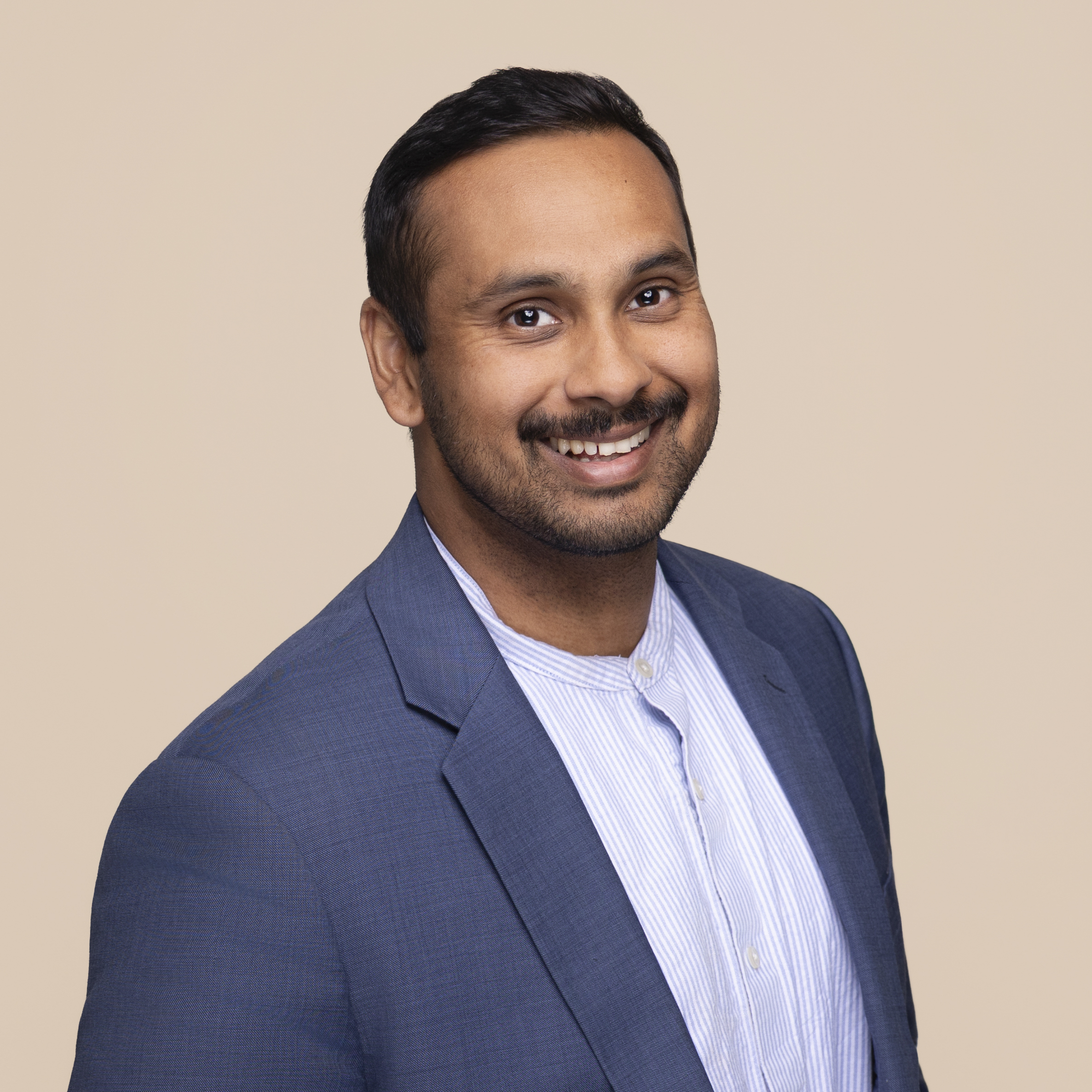
Introducing Kirin Kumar, Greenlining’s VP of Policy: Building the Economy Our Communities Deserve
It doesn’t take an in-depth economic analysis to understand that life in America today is harder. For anyone outside of the wealthiest minority – especially communities of color, low-income families, small business owners, and people on fixed incomes – you feel it in higher costs at the grocery store, rising rents and energy bills, and ballooning transportation expenses.
At the same time, longstanding barriers to affordable credit, insurance, and capital are becoming more visible as climate risks and disasters put additional strain on local economies. The cost of living keeps going up, while the systems that are supposed to support stability aren’t keeping pace.
The question we should all be asking is: who is our economy built to serve – and what does that say about the values we hold around our democracy? This is the context I’m stepping into as I join The Greenlining Institute as Vice President of Policy.
This Moment Demands Clarity
We are operating in a national environment defined by rising authoritarianism and the steady erosion of equity protections that communities have fought for decades to secure. The current administration is drawing on all too familiar tactics – using xenophobia, racism, and anti-immigrant rhetoric to divide, distract, and consolidate power.
Efforts to weaken environmental protections and oversight of financial systems including the Community Reinvestment Act, the Consumer Financial Protection Bureau, and the Endangerment Finding are clear examples of this strategy at work. Under the guise of “promoting economic growth,” these actions seek to freely enable the exclusion and subjugation of the working class in service of concentrating wealth and power.
In reality, the current economic system has never fully worked for communities of color in this country, and so, a purely defensive posture only works to return us to a flawed system. Instead, we have to be equally clear about what we’re building toward – an economy grounded in shared prosperity, where opportunity and access to opportunity supersede concentrated gain.
Even in the current political environment, our mandate is clear: we must protect what has been won, while still continuing building toward the future we know is possible. We defend because these policies matter in people’s daily lives. We build because a different economy is still within reach. And when political headwinds shift and enable resources to again flow at scale, communities should be ready not just to receive investment, but to shape what comes next.
The Work that Brought Me Here
In many ways, this work feels less like a new beginning and more like coming home.
Like many bright-eyed undergraduates, I began my career hoping to serve communities through medicine. But an opportunity to study the environmental drivers of developmental disorders made clear that structural factors like the concentration of communities of color near high-capacity roadways or disparities in access to green space were shaping health outcomes long before anyone entered a clinic. I saw that true service to communities had to include working beyond the clinic to change the systems that determine health and opportunity in the first place.
This realization set me on a path through many of the spaces where Greenlining operates: supporting community-led planning, advancing policy change, building durable capacity, holding public institutions accountable, and working to unlock resources across funding systems.
I’ve worked deep in the weeds as a transit planner expanding access to affordable transportation, as a local nonprofit advocate advancing equitable land use policy alongside communities of color, and at the state level strengthening capacity-building investments and embedding racial equity across public systems. More recently in philanthropy, I’ve focused on moving resources upstream so communities can move beyond cycles of crisis toward building long-term climate and economic resilience.
Across these experiences, I kept coming back to the same fundamental truth: communities have vision, leadership, and deeply-rooted solutions but have been denied access to the resources to make it possible.
This is no accident. Redlining functioned by denying capital and stripping wealth from communities of color, while also driving environmental injustices that compounded over generations. Exposure to pollution, poorer health outcomes, and sustained disinvestment became reinforcing conditions. What remains today is not just a gap in resources, but a set of interconnected systems that continue to shape who has access to health, wealth, and opportunity.
While these dynamics have evolved, they have not disappeared. Inequities in insurance markets, algorithmic bias in financial decision-making, the proliferation of both AI and the infrastructure that powers it, and the rapid growth of largely unregulated financial technologies reflect new forms of exclusion and community harm. At the same time, public and private capital often continues to flow in fragmented ways that fail to align with community priorities.
Translating Investment into Equity
The years following 2020 made this especially clear. Even as unprecedented federal resources were made available for climate projects and economic recovery, many communities faced barriers to accessing and implementing those funds. The challenge was rarely a lack of ideas. More often, we were trying to propel projects over the finish lines in communities that have been starved of capacity, capital, and the conditions that enable local economies to thrive. I saw firsthand how hard communities were working to make these resources land, and how often the systems around them made that harder than it needed to be.
That experience shone a light on a key faultline: resource availability alone does not create equity. The ecosystem around it matters just as much, shaping whether policies and resources translate into real outcomes.
To me, building a greenlined economy, then, is not only about how much we invest, but about how systems are designed, who shapes them, and whether they deliver for communities in ways that are usable, timely, and aligned with their priorities. Capital is a critical part of that equation, but so are the rules, relationships, and accountability structures that determine how it flows and who it serves.
Realizing this vision also requires clarity about who we are building with and for. As climate investments accelerate, especially around clean energy, they must be intentional about addressing root causes. Naming the role of redlining and institutional racism is essential – not as rhetoric – but as a foundational guide for ensuring that climate investments repair harm rather than reproduce it.
Communities Have Always Led the Way
For decades, communities of color have made systems work where they were never designed to, drawing on deep knowledge, relationships, and cultural grounding to build, adapt, and push past barriers. What has been stripped through disinvestment is very real, but it has never included the generational wisdom that communities carry with them. From promotora networks and local entrepreneurship to the growing recognition of Tribal Ecological Knowledge as essential to land stewardship, the foundation for a more just and sustainable economy is already here.
For more than three decades, Greenlining has operated at this intersection — confronting structural inequities while also recognizing and supporting the leadership and self-determination of communities. Through policy advocacy, holding institutions accountable, and place-based capacity building, it has worked to ensure that resources reach the communities that have been historically bypassed, and that those communities lead in shaping the systems that affect their lives.
That approach is especially important now as we approach the mid-point of the current presidential administration. Protecting hard-fought gains must go hand in hand with continuing to build, with a focus on making systems work better in practice for the communities they are meant to serve, such that we are ready when the time comes.
I’m excited to be part of that work and to build alongside the partners who have been leading it for decades, and from whom I have so much to learn. The challenges ahead are real, but so is the opportunity to ensure that future investments translate into lasting improvements in health, economic stability, and community ownership.
That is work worth coming home to.