
Race must never be a barrier to opportunity.
Race must never be a barrier to opportunity.
About Us
Shaping an Abundant Future
Community drives every aspect of our work.
The Greenlining Institute works towards a future where communities of color can build wealth, live in healthy places filled with economic opportunity, and are ready to meet the challenges posed by climate change.
Learn MoreThe Latest
Read the latest news and updates from Greenlining


GREENLINING THE BLOCK
Community Visions for Climate Justice
In 2023, The Greenlining Institute announced Greenlining the Block, a multi-year initiative to build power in community-based organizations that are advancing climate justice neighborhood projects with a $6.75 million commitment of resources to communities in California and across the country. Greenlining the Block is partnering with 24 community-based organizations in neighborhoods to prepare for and maximize federal, state, and local infrastructure investments to drive effective climate action that meets their needs.
Learn More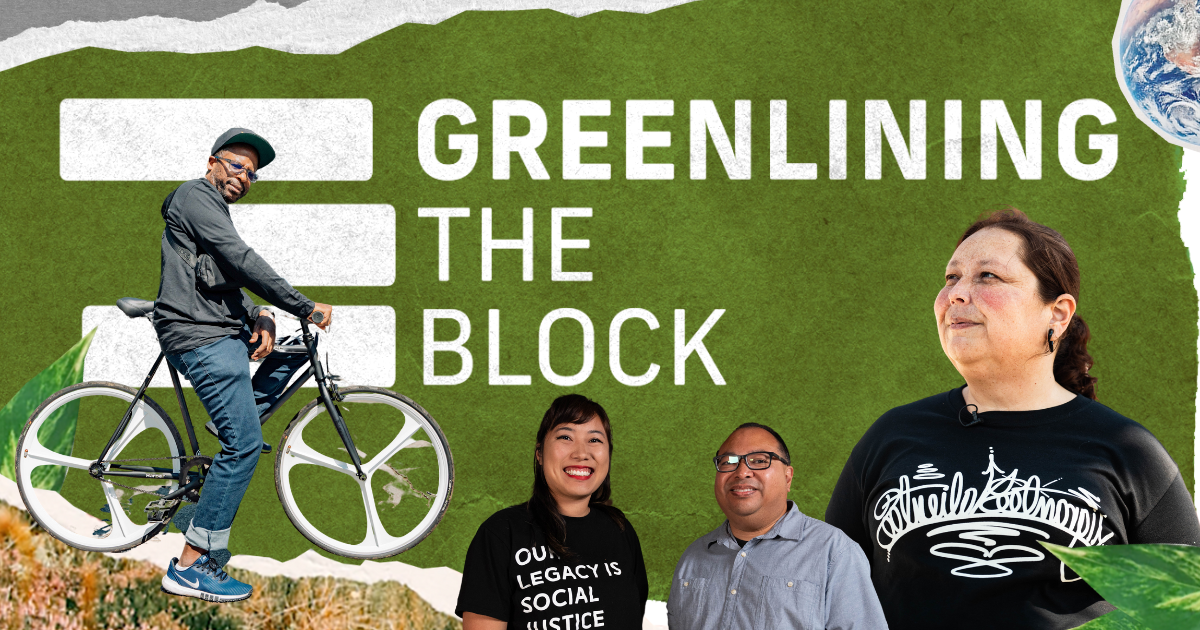
Our Work
Working Towards a Future Not Yet Realized
The Greenlining Institute, founded in 1993, was created to fight the lasting legacy of redlining, the illegal and systematic practice of excluding communities of color based on their race. We’re creating a future of abundance by shaping a more just, inclusive economy.Learn More

Economic
Equity
We advocate for race-aware policies that hold financial institutions accountable, end discriminatory practices, and establish pathways to financial security and prosperity.
Read More
Climate
Equity
We advance policies that build healthy and climate-resilient communities of color that benefit from the jobs and wealth created by the green economy and reduce our reliance on fossil fuels.
Read More
Transformative
Communities
We support communities of color to exert their power and strengthen capacity to create and establish their own creative and enduring solutions.
Read More
Leadership
Academy
Our Leadership Academy mentors and trains leaders to bring lasting, transformative change for communities of color.
Read MoreLeadership Academy
Training the Next Generation of Racial Equity Leaders
Our Leadership Academy builds up emerging leaders to bring lasting, transformative change for communities of color.
Learn More